

Posting here paused for a bit because I did two posts (here and here) at Helen Dale’s substack on the social democratic policy of regime of 1945-1973 and the neoliberal policy regime of 1979-? and their decay. I have also been working on a Submission to the Bondi Royal Commission.
Mercantilism is one of those terms which is used very loosely for a variety of things, including a certain set of policies AND how they were theorised. What I am referring to in this post is a preference for a trade surplus, for exports to be higher than imports.
For any polity that (1) did not have sufficient local sources of silver or gold (i.e. bullion) and (2) whose economy was not fully monetised, in an age when (3) bullion dominated money, it was deeply rational to prefer to have a trade surplus. It was deeply rational to prefer inflows, rather than outflows, of bullion.
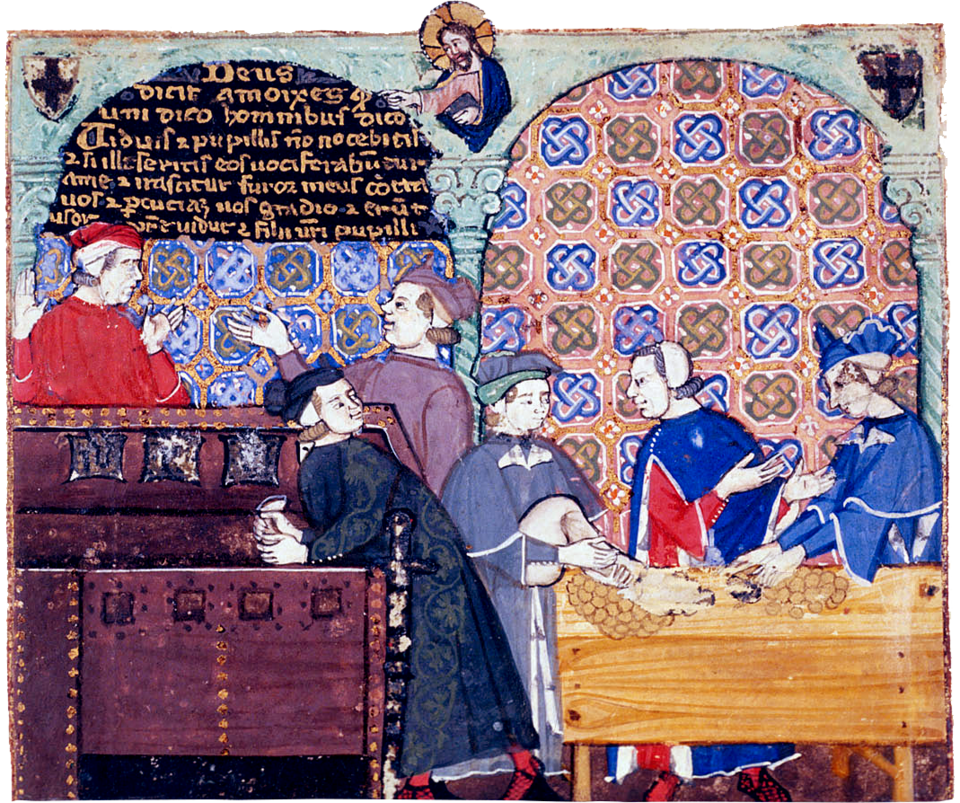
Money is a good. It is a transaction good. It provides a service. That service is to hugely reduce transaction costs. (Transaction costs are search and information costs; bargaining and decision costs; policing and enforcement costs.) Across history, bullion (particularly silver) dominated money, especially for international trade.
Brief diversion about money
Money can be held for later time periods, acting as an asset. Hence money can be analysed in terms of supply and demand, like any good, but you have to separate its use in exchange from its being held as an asset.
That money can be held over to later periods is why Say’s Law—that production generates demand—does not work as Jean-Baptiste Say originally thought it did. Money earned in the current time period could be held over to later periods. If people do that enough, there can be a general “glut” of good and services: that is, the crash in the level of transactions that we call a recession—or if it goes on long enough, a depression.
That debts are typically denominated in money; that money can be either a transaction good or an asset; makes money the “hinge” between output and asset markets and between current and future time periods. That is why expectations about future levels of spending, and the future value of money, are so central to macro-economic performance in our fully monetised economies.
All of this is fascinating stuff for understanding how economies work, though it is less germane to economies still in the process of becoming monetised. (We will return to these dynamics in the discussion of bullion—gold, silver, bimetal—standards.)
Back to the utility of shiny metals
Money reduces transaction costs. The more your economy is monetised, the larger it will tend to be. The less your economy is monetised, the smaller it will be tend to be. A large reason that various credit instruments developed was precisely to lower transaction costs without physically relying on bullion.
So, if your economy was not fully monetised, inflows of bullion expanded your economy. Conversely, outflows of bullion shrank your economy. An expanding economy provided a larger tax base, a shrinking economy a smaller one.
Apart from a bigger economy—most visible through more trade—meaning more tax revenue, rulers particularly favoured monetisation, as it so reduced the transaction costs, and administrative burdens, of their taxation and expenditure.
Clearly, if your economy was not fully monetised, you wanted bullion to flow in, not out. The easiest way to get that to happen, was to have a trade surplus, for the value of exports to exceed imports. So, if your economy was not fully monetised, and you did not have sufficient internal sources of bullion, it was rational to have a policy that fostered inflows of bullion.
How long did it take economies to fully monetise? Centuries and centuries. China imported silver for centuries. At no stage did it suffer significant inflation from silver “saturation”. (It did suffer bouts of inflation, and even hyperinflation, from its pioneering use of paper money.)
By the time of the first Opium War (1839-1842), the Qing Emperor ruled over perhaps a third of the population of the planet and something approaching a third of global GDP. American silver—i.e. silver from the Spanish and Portuguese Empires—had been flowing to China since the mid C16th. Perhaps one third of all the silver mined in the Americas went to China and Asia. At no point did China reach silver “saturation”, at no point was its economy fully monetised.
On the contrary, when there was a sudden sharp drop in silver inflows in the early C17th, this caused a major contractionary effect—in part as falls in transaction costs stalled or reversed—while population growth meant silver rose in value: such deflation had a serious contractionary effect, especially as peasants paid taxes in silver. This helped destabilise the decaying Ming Dynasty (1368-1644).
In the C18th, bullion outflows destabilised both the northern Trinh and southern Nguyen regimes in Vietnam (Lieberman Vol.1, Pp421-2). Much of the success of Muscovy came because exports persistently exceeded imports, especially from its Volga and then Siberian conquests, creating a persistent bullion inflow (Lieberman Vol.2, Pp 218ff) that helped finance its imperial ambitions.
That China never reached full monetisation, full silver “saturation”, makes the Qing Dynasty’s resistance to European imports make much more sense. They wanted silver inflows to continue, especially after the Qing central government had expended its silver reserves putting down various rebellions, notably the White Lotus Rebellion (1794-1804).
Not thinking through the implications of economies not being fully monetised—and the role of money as a good that reduces transaction costs—has led to glib denigrations of the Qing Dynasty’s policy. Yes, there was a lack of curiousity about the outside world and an intellectual insularity. Yes, the Court cast its decisions—as Imperial Dynasties usually did—in terms flattering to itself and China. But as was also usually the case, the self-flattering spin was over the top of a practical policy.
It was in the Qing Dynasty’s (and China’s) interest that silver continue to flow into China. This is especially as the experience of paper money under the Song (960-1279), (especially) the Yuan (1271-1368) and the Ming (1368-1644) Dynasties had been rather unfortunate. It was a case of tried that, didn’t like it.
Meanwhile, in Europe …
All this contrasts with Europe, where the flood of first Central European and then American silver generated the “great inflation”, the Price Revolution. If about one-third of American silver went to China and Asia, that meant about two-thirds of it went to Europe.
The European economy was significantly smaller than China’s, was already more monetised, and had more extensively developed credit instruments, which it would develop further. So, silver was flowing into Europe faster than both increases in output and how fast economies were monetising, driving up prices over time. The flood of silver, and expansion of credit instruments, continually lowered transaction costs, generating an expansionary economic effect.
As Europe was recovering demographically from the C14th Black Death (and later) plague outbreaks, the population was increasing, driving up in-kind demand in the non-monetised sections of the economy. This population increase—generally in excess of increases in output—saw the increased returns to labour due to plague-imposed labour scarcity disappear across much of Europe, especially further away from the Atlantic littoral. The increase in trade in the Atlantic economy ameliorated the fall in returns to labour in Northwestern Europe.
The inflationary effect of the inflows of Central European and then American silver was muted, as part of the silver inflows went into expanding the monetisation of European economies. Nevertheless, we can see why, given the size of its population and scale of its economic activity, a China with larger population and output, and smaller inflows of silver, never reached silver “saturation”.
We can also measure (somewhat) the rate of monetisation. We can do that by comparing how much increases in the price level were driven by monetary factors, and how much by population growth.
If your economy is fully monetised, then inflation is always and everywhere a monetary phenomenon. If your economy is not monetised at all, then any rise in the price level cannot be a monetary phenomenon. (What price level means in an economy without money is an interesting question, but we will leave that aside.)
A rising price level means that aggregate demand is increasing faster than aggregate supply. What raises aggregate demand? The use of money in exchange increasing faster than output. The population (so in-kind demand) increasing faster than output. Both these things can raise the price level.
So, the more monetised your economy is, the more inflation will be a monetary phenomenon. The less monetised—the more dominated by in-kind exchange—your economy is, the more inflation will be a result of population increase.
It will also directly signal immiseration, due to the population/land ratio increasing without matching increases in output. Specifically, the supply of labour—very closely tied to population—is increasing faster than output, due to land (and capital) constraints. Malthusian dynamics operate if technology is sufficiently static.
Claiming population increase drives price level rises only makes sense if a significant part of the economy is not monetised. So, the more price level rises are driven by population increase, the less monetised your economy is. Conversely, the more price level rises are driven by increase in the use of money in exchange in excess of increases in output, the more monetised your economy is.
Fortunately, there is a paper that measures precisely that. From it we can see that the European economy did not become fully monetised until sometime after 1700. Even then, the monetisation was not done purely by bullion. The development of banknotes enabled monetisation to spread well beyond payments in bullion, even if their value was still anchored in bullion.
Bullion (gold and silver) standards
Money as a transaction good became a mixture of bullion and banknotes. Means of payment denominated in money extended to some credit instruments. Nowadays, means of payment denominated in money, but using credit instruments, has been massively expanded by EFTPOS (Electronic Funds Transfer at Point Of Sale).
(A debit card means the bank is borrowing from you, hence it pays you interest. A credit card means you are borrowing from the bank, hence you pay interest. They are both credit instruments, just in different directions. They are also both means of payments denominated in money.)
In 1914, most major Atlantic economies, apart from the US, went off the gold standard. From the UK completing going back onto the gold standard in 1823 to the mass exit in 1914, money as a medium of account—the thing that both denominates prices and promises and is used to pay them—was bullion.
The output-value of bullion was the output-value of money. This was gold in the gold standard countries (notably Britain and its settler dominions), silver in the silver standard countries (Germany, Austria-Hungary) and both in the bimetal standard countries (France and the Latin Monetary Union).
If bullion went up in value relative to output, the output-value of money went up and the money-prices of goods and services fell (deflation). If bullion went down in value relative to output, the output-value of money went down and the money-prices of goods and services rose (inflation).
Periods of gold rushes—of increased output of gold—were inflationary periods in the gold-standard economies. More gold meant cheaper gold, if the gold supply was rising faster than output—which, during the gold rushes, it was.
Periods when the demand for the monetary use of gold increased faster than output were periods when the output-value of gold rose, so prices fell. These were deflationary periods in gold-standard economies. The first such period in the late modern era (i.e., after the French Revolution) was in the 1820s, as the UK completed officially going back on the gold standard.1
There was another notable such period after 1873, when Germany, Austria-Hungary, France and the US all went on the gold standard, greatly raising the monetary demand for gold. The deflation became much more intense in the early 1890s. This severe depression ended with the surge in gold supply from the Witwatersrand, the Klondike, and the Kalgoorlie and Coolgardie, gold rushes.
The last major deflationary episode was what became known as the Great Depression of the 1930s. As the gold-exchange rate of the franc—set in June 1928, when France completed going back onto the gold standard—meant that gold bought more in France than elsewhere, gold flowed into France.
The franc was under-valued (cheap in gold terms), hence gold flowing into France. Conversely, when the UK went back on the gold standard (May 1925), the pound was over-valued (expensive in gold terms). So, gold flowed out of Britain. This pattern somewhat poisoned Anglo-French relations.
The Bank of France simply used the gold inflow to top up its gold reserves. That meant the Bank of France—which was one of the small number of central banks that dominated gold holdings—was continually taking gold out of the monetary system. This continually increased the output-value of the gold still within the monetary system, driving prices down. This meant that money would buy more in the future, so people held onto it. This meant spending fell, so incomes fell, so debts became more and more onerous, setting off a wave of bankruptcies and financial collapse.
This Debt-Deflation economic death-spiral in all the gold-standard countries came from the policy of the Bank of France driving up the output-value of gold by continually reducing its effective supply within the monetary system. (Plus the failure of the US Federal Reserve to counter this.) Countries exited the economic death-spiral the Bank of France had created by exiting the gold standard.
For all folk complain about inflation—especially since the US finally abandoned the link of the US dollar with gold in 1971—the effects of the incompetent technocratic management of the gold-standard in the late 1920s and early 1930s were far worse. In a situation where four central banks (the US Federal Reserve, Bank of England, Bank of France, the Reichsbank) overwhelmingly dominated gold holdings, the gold-standard became technocratic money.
I have little patience for gold-bugs who write as if the millennia of monetary history reached some sort of apogee in … the forty years from 1873 to 1914. Not only was, historically, silver a far more important monetary metal, Milton Friedman suggested—and he was probably right—that the previous period of 1823-1873 where some countries were on the gold standard (mainly Britain and its settler dominions), some were on the silver standard (Germany, Austria-Hungary) and others were on a bimetal standard (France and the Latin Monetary Union) was probably more stable.
The slow process of monetisation
But all this story since 1823 is a story of fully monetised economies, where money is one side of almost all transactions. For most of history, economies were not fully monetised, they included a significant level of in-kind transactions. This was particularly true of economies with significant rural hinterlands.
If your economy was not fully monetised, and you had insufficient local supplies of gold and silver—of bullion—then you wanted bullion to flow in, not out. So, you wanted exports to exceed imports.
Some of the theorising about this was rather silly. But, then, some of contemporary Theorising in mainstream Economics is rather silly too.
Nevertheless—given that money so reduces transaction costs—wanting bullion to flow in, not out, when (1) you did not have adequate local supplies of bullion; (2) bullion was by far the dominant form of money; and (3) your economy was not fully monetised; was sensible public policy.
References
Philippe Aghion, Ufuk Akcigit, and Peter Howitt, ‘The Schumpeterian Growth Paradigm,’ Annual Review of Economics, Vol. 7:557-575 (August 2015). https://www.annualreviews.org/content/journals/10.1146/annurev-economics-080614-115412
David Hackett Fisher, The Great Wave: Price Revolutions and the Rhythm of History, Oxford University Press, 1996.
Jack A. Goldstone, ‘Efflorescences and Economic Growth in World History: Rethinking the “Rise of the West” and the Industrial Revolution,’ Journal of World History, 2002, Vol. 13, No. 2, 323-389. http://culturahistorica.org/wp-content/uploads/2020/02/goldstone-efflorescences.pdf
Morgan Kelly, ‘The Dynamics of Smithian Growth,’ Quarterly Journal of Economics, 112, no. 3 (August, 1997), 939-964. https://ideas.repec.org/p/ucn/oapubs/10197-521.html
Tjalling C. Koopmans, ‘Measurement Without Theory,’ The Review of Economics and Statistics, Vol. 29, No. 3 (Aug., 1947), pp. 161-172. https://fairmodel.econ.yale.edu/ec439/koop1.pdf
Victor Lieberman, Strange Parallels, Southeast Asia in Global Context, c.800–1830: Volume I, Integration on the Mainland, Cambridge University Press, [2003] 2010.
Victor Lieberman, Strange Parallels, Southeast Asia in Global Context, c.800–1830: Volume 2, Mainland Mirrors: Europe, Japan, China, South Asia and the Islands, Cambridge University Press, [2009] 2013.
Debin Ma, ‘Rock, scissors, paper: the problem of incentives and information in traditional Chinese state and the origin of Great Divergence,’ Economic History Working Papers 37569, London School of Economics and Political Science, Department of Economic History, 2011. https://www.lse.ac.uk/Economic-History/Assets/Documents/WorkingPapers/Economic-History/2011/WP152.pdf
Debin Ma & Jared Rubin, ‘The Paradox of Power: Principal-agent problems and administrative capacity in Imperial China (and other absolutist regimes),’ Journal of Comparative Economics, (2019), 47(2), 277-294. https://digitalcommons.chapman.edu/esi_working_papers/212/
Jacques Melitz, & Anthony Edo, ‘The Primary Cause of European Inflation in 1500-1700: Precious Metals or Population? The English Evidence,’ CEPR Discussion Papers 14023, 2019. https://www.cepii.fr/PDF_PUB/wp/2019/wp2019-10.pdf
John H. Munro, ‘Review of Fischer, David Hackett, The Great Wave: Price Revolutions and the Rhythm of History,’ EH.Net, H-Net Reviews, February, 1999. http://www.h-net.org/reviews/showrev.php?id=2828
Tuan-Hwee Sng, ‘Size and dynastic decline: The principal-agent problem in late imperial China, 1700–1850,’ Explorations in Economic History, Volume 54, 2014, 107-127. https://conference.nber.org/confer/2011/CE11/Sng.pdf
Scott Sumner, The Midas Paradox: Financial Markets, Government Policy Shocks, and the Great Depression, Independent Institute, 2015.
Technically, the UK had previously been on a silver and then a bimetal standard, but the latter was functionally a gold standard, until that was suspended (1797-1819) during the French Revolutionary and Napoleonic Wars.
Wow! The Edo and Merlitz paper! Wow! Thank you.
But didn't everyday transactions in China take place in copper coins? I was under the impression that the problem with fluctuating silver levels in China was largely of the exchange rate instability between the currency of everyday life (copper) and the currency taxes had to be paid in (silver).
But then I am only vaguely remembering something I read nearly 20 years ago; probably "China Upside Down" (2007).