

There is a common “culture war” sport where more conservatively-minded folk, and various liberal ones, point out how inconsistent it is for various ideological/identity groups to make a thing of supporting organisations and regimes which are very much against—even murderously against—the ideals those ideological/identity groups allegedly stand for.

Queers for Palestine, and feminists for Hamas/Hezbollah/Iran, are particularly blatant examples of this. Hamas in Gaza and the Islamic regime in Iran literally kill homosexuals and violently repress women’s rights: they are religiously committed to women having less rights than men and being subordinate to them.
The inconsistency between who Hamas and the Islamic regime are, what they do, and the alleged ideals of Queers for Palestine and the feminists supporting Hamas/Hezbollah/Iran is obvious. Pointing out such inconsistency has, however, no purchase on Queers for Palestine, feminists for Hamas/Hezbollah/Iran, or similar groups.
On the contrary, pointing out the inconsistency brands one as not merely an outsider, but an enemy. It is precisely the embracing of such inconsistency that shows your commitment to the cause; to the shared political goals; to the shared politicised moralised status games. Doing all the required not-noticing, the required rationalisations, is a signal of commitment.
If they can make people ignore—or, even better, embrace—such inconsistency, that manifests their social and political dominance. The propensity of academics to be “risk averse”, and be conformist in various ways, has enabled motivated zealots to create the Critical Theory magisterium that has come to dominate more and more of Anglo-American academe.
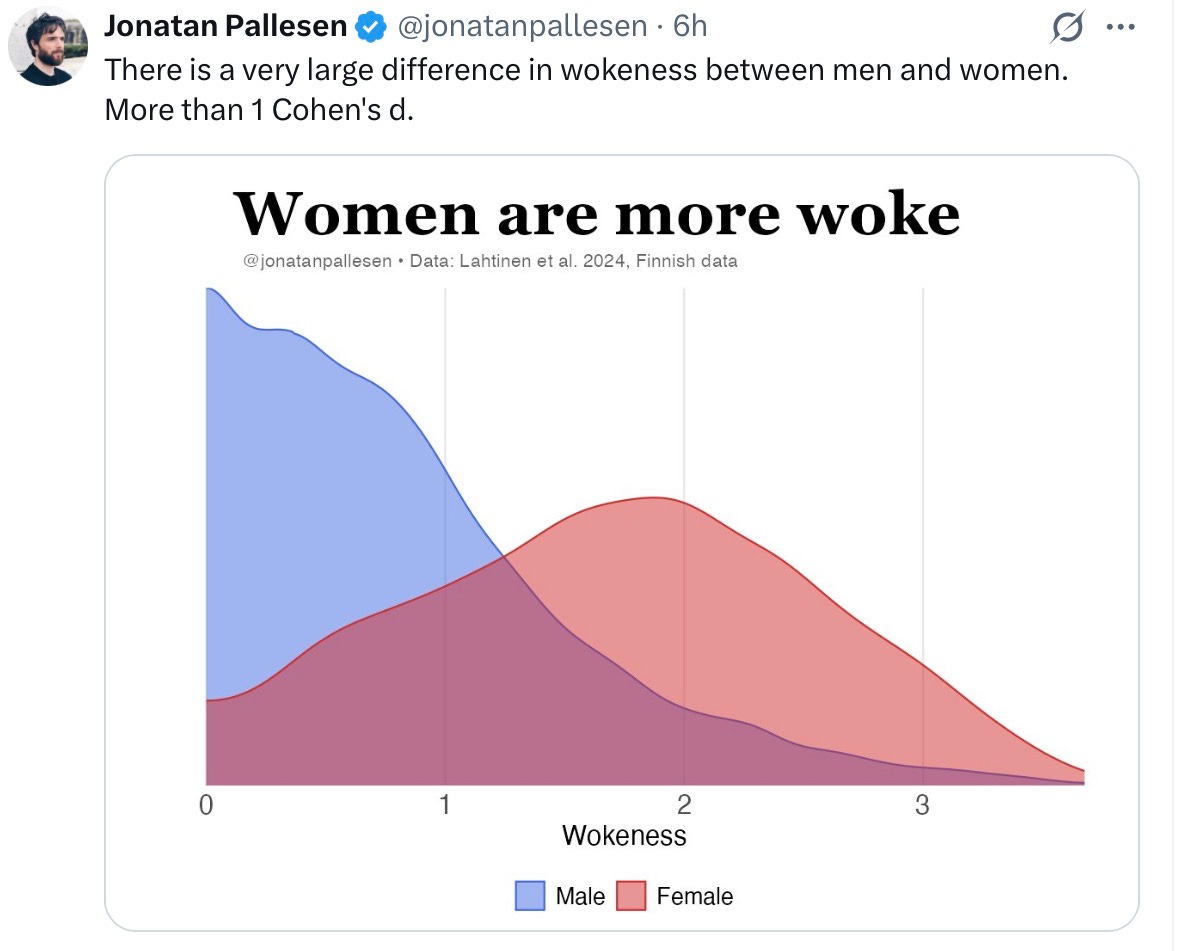
As women are more risk averse and conformist than men, this has gathered steam as academe has feminised. This effect is all the stronger when they generate an accompanying elite status strategy based on “good people believe X”, turning beliefs into moralised cognitive assets. Assets to be defended—and defended together—as shared assets in a shared status game.
By attacking such inconsistency, one is simultaneously signalling one’s outsider status and attacking the signal they are using the show commitment to the cause; to the moral in-group.
As part of such signalling commitment, believers produce commentary shorn of all inconvenient context. We saw plenty of that in commentary blaming NATO and the US for the Russian attack on Ukraine. We are seeing plenty of the same on Iran.
Even more important than this—at least among the core believers—is that, at the foundational belief level, it is not inconsistent at all. The question is not what Hamas or Hezbollah or the Islamic Regime actually stands for: the question is, who they are enemies of.
For this is the politics of the Friend/Enemy distinction. One of the foundational beliefs of left-progressive politics is that social dynamics are dominated by conflict. This was stated by Karl Marx and Friedrich Engels at the beginning of The Communist Manifesto:
The history of all hitherto existing society is the history of class struggles.
Freeman and slave, patrician and plebeian, lord and serf, guildmaster and journeyman, in a word, oppressor and oppressed, stood in constant opposition to one another, carried on an uninterrupted, now hidden, now open fight, that each time ended, either in the revolutionary reconstitution of society at large, or in the common ruin of the contending classes.
Moreover, this is eschatological politics: politics oriented to a final, socially-transformative goal that trumps all other considerations. Both the moralised status games and the politics are directed against people and social structures within their own societies. The issue is not what folk outside such societies do, it is what the implications are within their own societies.
Anyone who is an enemy of such social structures, such people—literally anyone—is a political Friend. This is how the politics of the Friend/Enemy distinction works.
The dynamics of such politics were stated quite clearly by Karl Marx and Friedrich Engels at the end of The Communist Manifesto:
In short, the Communists everywhere support every revolutionary movement against the existing social and political order of things. In all these movements they bring, to the front, as the leading question in each, the property question, no matter what its degree of development at the time.
…
The Communists disdain to conceal their views and aims. They openly declare that their ends can be attained only by the forcible overthrow of all existing social conditions.
It is no accident that Marx and Engels set out the key elements way back in 1848. All forms of Critical Theory are developments of Marxian thought and utilise the same underlying dynamics and oppressor-oppressed template. They are just updates to avoid the burdens of Marx’s failed predictions; to quarantine away the record of tyranny, mass murder and economic stagnation that operational Marxism so relentlessly generates; and to move away from relying on a Western working class that utterly failed to fulfil their designated role as the foot soldiers of revolution.
Yes, this is monstrous politics that regularly generates and attracts monsters both grand (Lenin, Stalin, Mao, the Kim dynasty, Mengistu, Pol Pot) and small (such as all those who carried out their mass murders and pervasive cruelties).
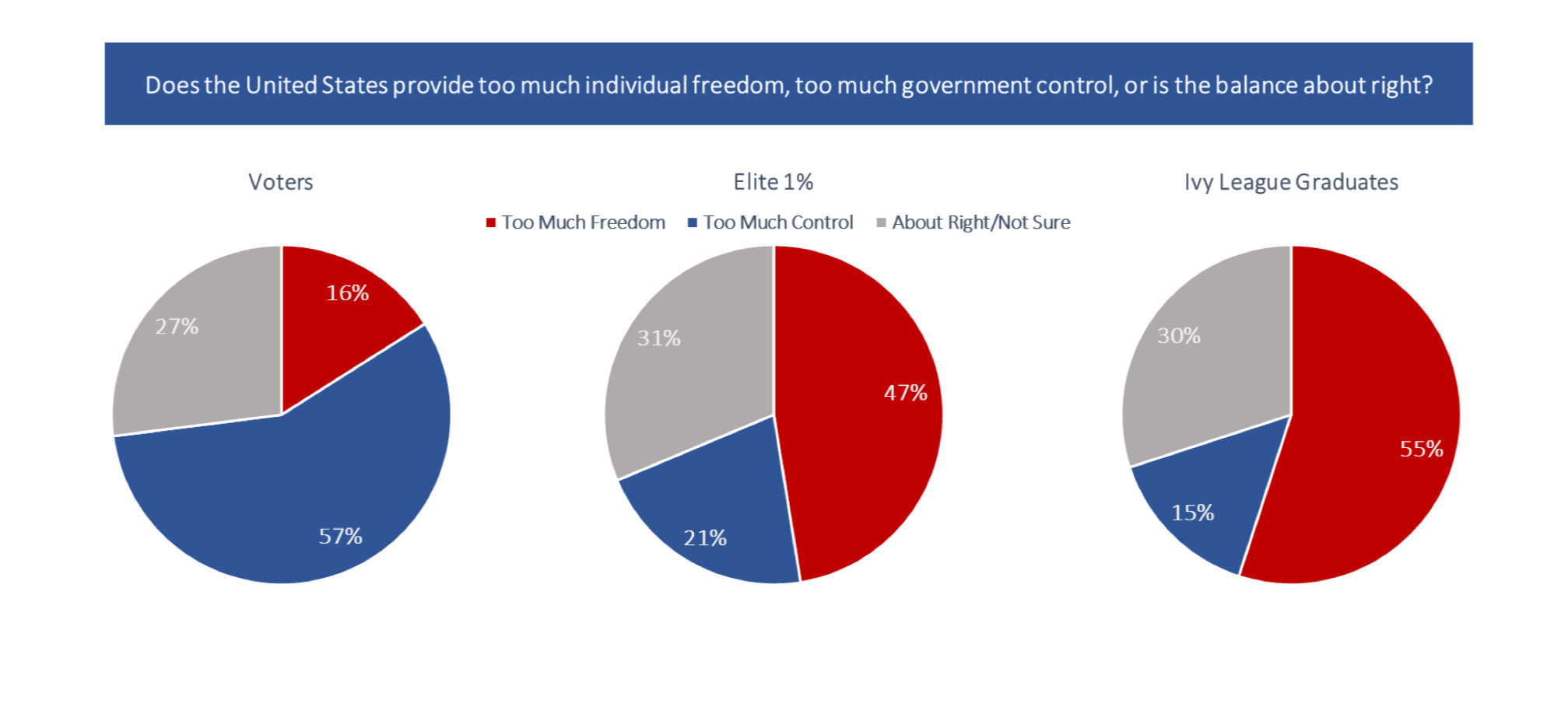
Universities increasingly dominated by the Critical Theory magisterium are training graduates—particularly in elite institutions—to be conformist liars who despise people who think differently, replicating patterns within Communist countries because they are the same foundational ideas with the same consequences.
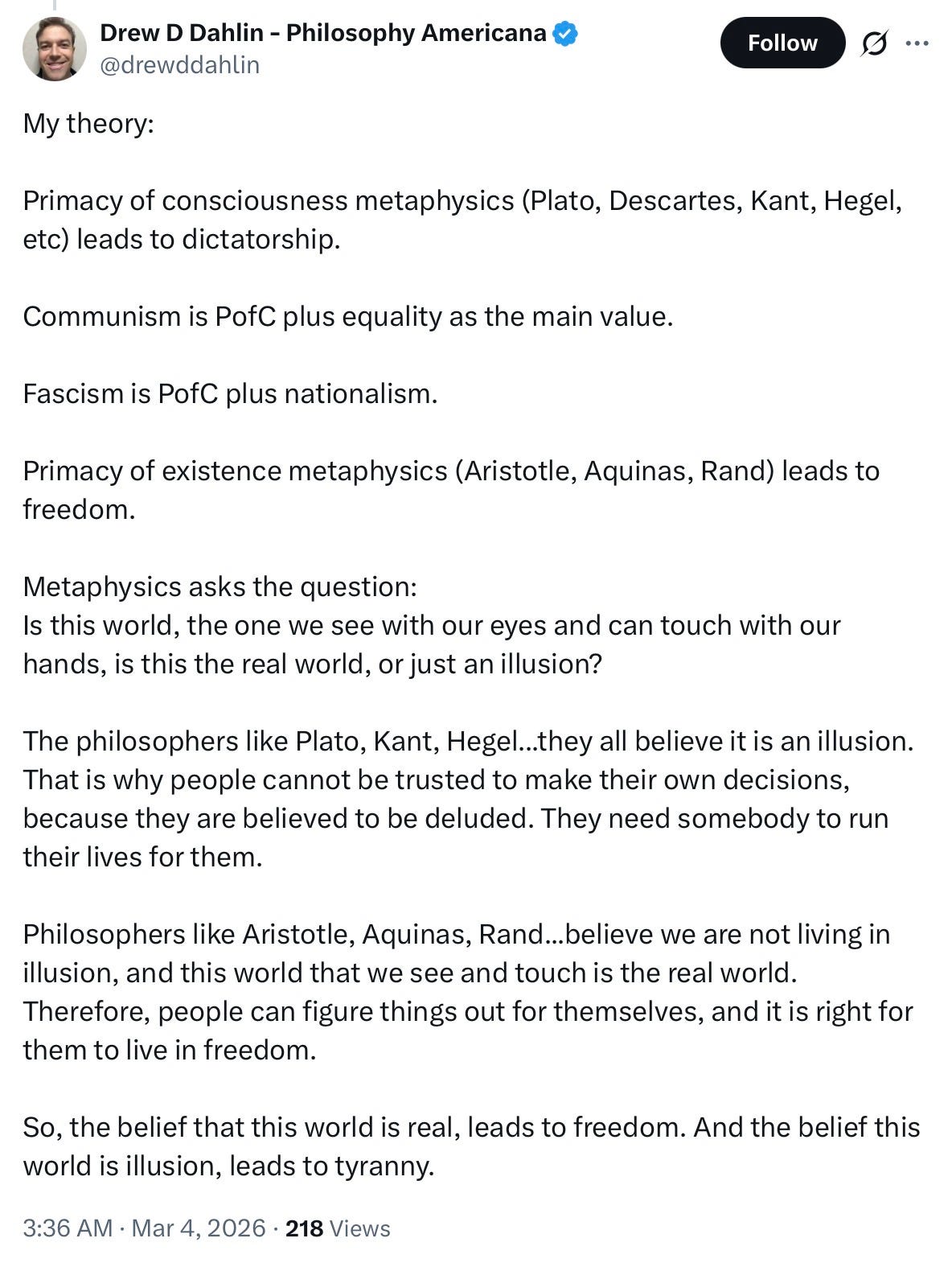
Part of such politics is that its adherents are the only ones who Truly See. This is the metaphysics where (untutored) consciousness is a realm of illusion.
The “true” reality is that the True Enemy is worse than anyone else, and absolutely Worse than anyone who opposes them. A good example of such commentary—carefully stripping events of all inconvenient context, to the extent of outright lies and misrepresentations—is here. It is a display of correct Friend/Enemy consciousness.
Those who think that the inconsistencies should have purchase, should matter, are embracing the primacy of empirical reality, not the primacy of correct consciousness. Giving lived experience priority—a development from Standpoint epistemology—is precisely about denying a shared reality. Instead, it is about whose consciousness has primacy.
Yes, it is worth reminding those outside such politics just what monstrous contortions such politics requires. But none of this will be persuasive to those who embrace such politics.
In pointing out the monstrous inconsistencies, you are broadcasting your outsider and Enemy status. Moreover, given the underlying consistency of any enemy of The Enemy is a Friend, the Friend/Enemy principle that anything that attacks the existing social order within their own societies is to be supported, is far more powerful among the believers.
References
Tim Kaiser, Marco Del Giudice, Tom Booth, ‘Global sex differences in personality: Replication with an open online dataset,’ Journal of Personality, 2020, 88, 415–429. https://onlinelibrary.wiley.com/doi/10.1111/jopy.12500
Musa al-Gharbi, We Have Never Been Woke: The Cultural Contradictions of a New Elite, Princeton University Press, 2024.
Oskari Lahtinen, ‘Construction and validation of a scale for assessing critical social justice attitudes,’ Scandinavian Journal of Psychology, (2024) 65: 693-705. https://onlinelibrary.wiley.com/doi/10.1111/sjop.13018
Karl Marx and Friedrich Engels, The Communist Manifesto, Amazon, [1848] 2023.
Carl Schmitt, The Concept of the Political: Expanded Edition, Translation, Introduction, and Notes by George Schwab, University of Chicago Press, [1932] 2007.
I think there's also an element of narcissistic gnosticism here too.
The Social Justice disciple blessed with a higher "critical consciousness" doesn't need to worry about mortal trivialities like facts, reason, reality etc, they have been blessed with a higher form of spiritual knowledge that personally connects them to the sacred (and sets them above the rest of us).
The Marxist "ruthless criticism of all that exists" seems to reach its terminus and/or apotheosis in the minds of our young utopian radicals, who know nothing because all things that can be known have already been sentenced to death for their crimes against the egalitarian future (so what's the point?) and who live with their eyes always fixated on their handheld mirrors aka the dopamine crack pipes we call "phones", which always tell them that they are the fairest of them all, as well as the wisest and most "empathetic". They imagine themselves residing at the apex of all human wisdom and morality, thus there's no point in thinking, debating, in empirical testing and re-evaluation or in compromise. There's really nothing left to do but "raise awareness" (of themselves) and join the armies of the Good in their battle to destroy the armies of the Evil (everyone not in their tribe).
The 21st-century children of the Permanent Revolution are like toddlers who visit your home and smash everything they can get their tiny hands on. They will destroy anything that doesn't flatter them or feed their desires and will call it "liberation". How could they ever be wrong, misguided or wicked when everyone and everything they know tells them the opposite?
The Pleasure of Power.
This indoctrination program in the Humanities has been running for over five decades. I saw it first hand beginning to peak in 1998-2000.
It functions as a toolbox to develop personal power through carefully crafted language tools. What makes it so attractive is that while you are building your power base, you also cultivate the sense of moral superiority. It's a delicious recipe.
You are placing yourself as the ultimate patron over the weak and the powerless. Your education becomes a weapon of justice. If you allow free debate and open inquiry, it reduces your power. The pleasure of power tickles the base of the brain stem.