

The Mongols created the largest contiguous empire in history. They knew a thing or two about war and conquest. Yet, they did suffer defeats and their Empire, like all Empires, died. Indeed, as a united empire, it survived for a mere 53 years, from the proclamation of Genghis Khan in 1206 to the death of Mongke Khan in 1259.
The Empire then broke into four parts, three of which lasted less than a century before either collapsing or breaking up into smaller entities: the Ilkhanate 1256-1335 (79 years); the Chagatai Khanate 1266-1347 (81 years); the Yuan Dynasty 1271-1368 (97 years), though the Northern Yuan rump state continued until 1635. The most successful of the original four was the Golden Horde 1266-1459 (193 years). The Chagatai Khanate and Golden Horde also had surviving rump states, notably the Great Horde (1459-1502). The last remnant of the Chagatai khanate, and of the rule of Genghis Khan’s descendants, was the tributary Kumul Khanate (1696-1930).
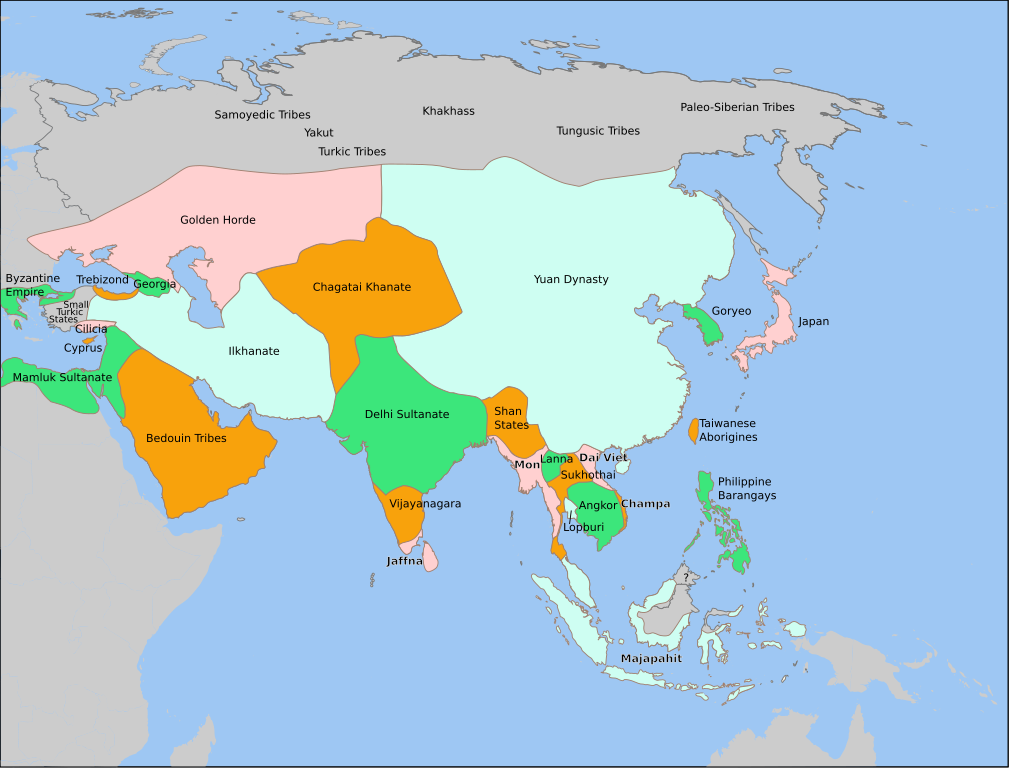
Among imperial dynasties of China, there are the brief unification dynasties:
Qin (221-206 BC, 15 years)
Jin (280-304, 24 years: though the dynasty lasted from 266 to 420, it only unified China briefly)
Sui (389-618, 29 years)
There are the long unification dynasties:
Han (206BC-220, 426 years)
Tang (618-907, 289 years)
Ming (1368-1644, 276 years)
Qing (1644-1912, 268 years)
Technically, the Song (960-1279) are not a unification dynasty, not even the Northern Song (960-1127). Indeed, it is an important feature of the Song dynasty that it was always part of a state system it never militarily dominated.
The Mongol Yuan dynasty is very much the “in-between” dynasty, unifying China longer than the three brief unification dynasties, but considerably less than the long unification dynasties. What is more striking is that it kicks off a period of effectively continuous unification of China, from 1279 until 1912, punctuated by strife during the transition from one dynasty to another.
So, what did not work against the Mongols during their remarkable waves of conquest?
Responding to a Mongol invasion by going straight to set-piece battles.
The Mongols would invade: well-supplied, highly mobile, well-informed, using tactics the defenders were not experienced with or prepared for and which the Mongols homed by fighting against an (expanding) range of enemies. Going for such set-piece battles regularly ended disastrously for the defenders. Hence the Mongols creating the largest contiguous empire in history.
It was only well into the Mongol era—when folk had much more experience with how the Mongols operated—that going out and meeting them in set-pieces battles began to work. Examples of that included the victory of the Mamluks of Egypt over the Mongol Ilkhanid forces at the battle of Ain Jalut in 1260 and the victory of the Sultanate of Delhi over the Chagatai Khanate at the battle of Ravi in 1306. Both of these victories ended Mongol attacks into the regions being defended.
That early Mongol success was part of a larger pattern. Having a range of enemies has regularly proved to be a winning military advantage for states by forcing the development of flexible and resilient military capacity. This was the advantage that the Macedonians had over the Greeks; the Romans against almost everyone; the Spanish Conquistadors against the Aztecs, Mayans and Incas. It was also why China was usually unified by northern frontier dynasties and pharaonic Egypt by southern frontier dynasties.
Conversely, if you fought regularly against one group, you learned their tricks and they learned yours. The Western Roman Empire eventually failed when the Germanic invaders—typically led by people who had fought in the Roman Army or as Roman allies—developed equivalent operational capacity to the Romans. This operational equivalence was demonstrated most dramatically by the crushing Roman defeat at the Battle of Adrianople in 378, even though the Western Empire took almost another century to collapse.
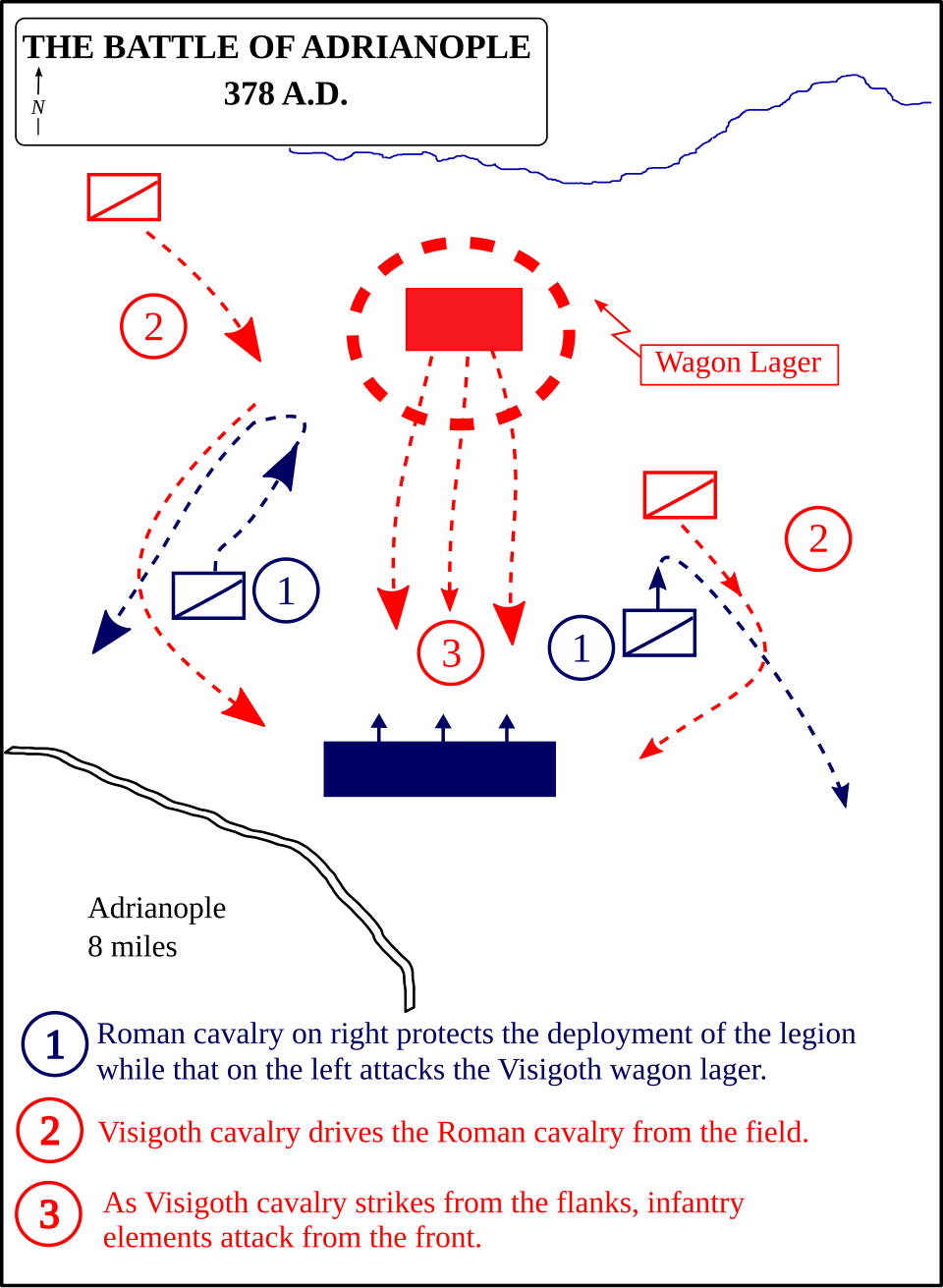
The Battle of Adrianople was less important in its immediate effects than in what it presaged. Tactically, it was a repeat of Cannae (216BC), except with a wagon laager rather than a clever infantry formation.
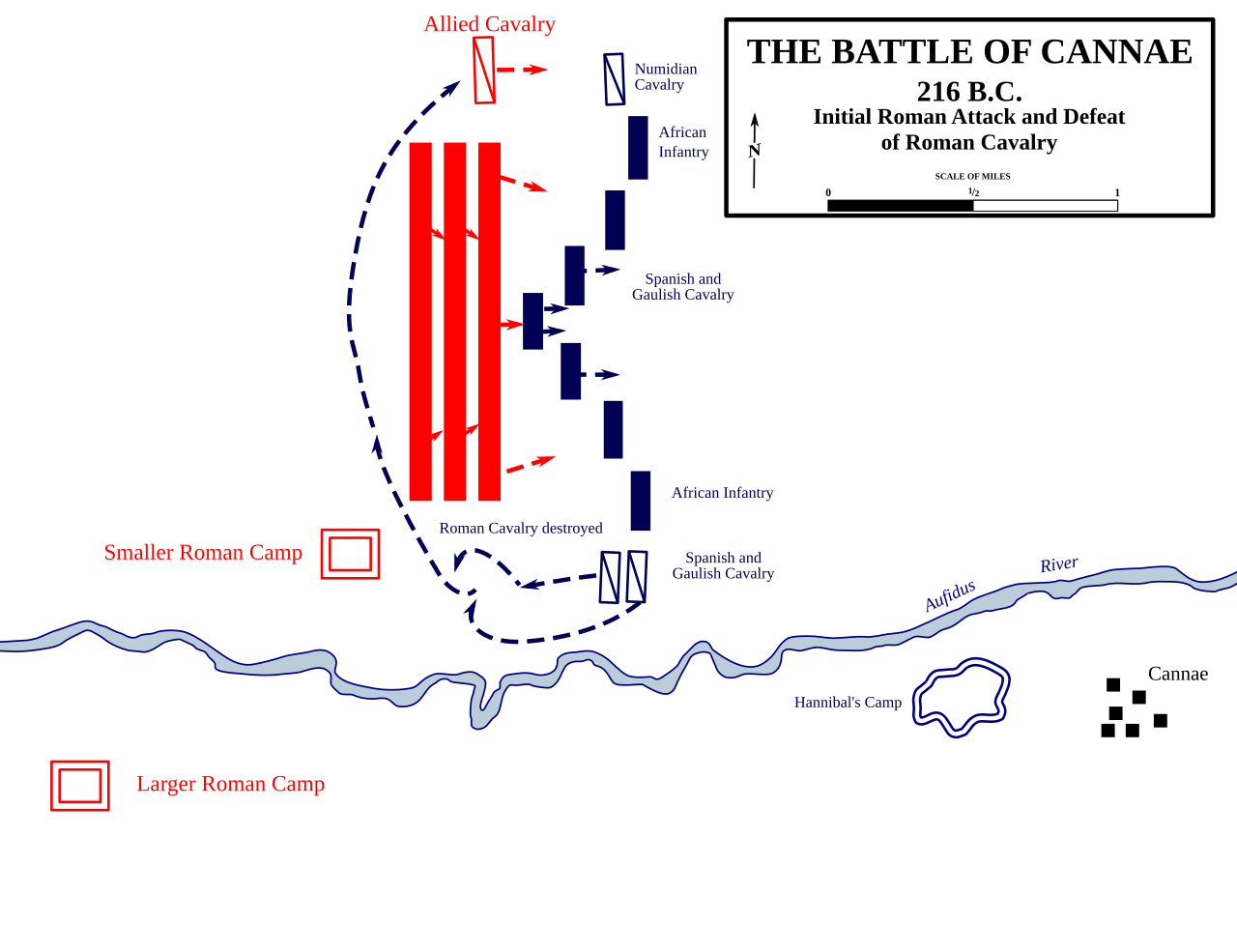
Much more importantly, the invading Germanics had developed an equivalent operational capacity to the Roman imperial state without the expensive bureaucratic “tail” of the late Roman state. This gave them a systematic advantage that eventually wore the Roman imperial state down.
This process took about a century—partly because it was the field army of the Eastern, not the Western, Empire that was destroyed at Adrianople. But also because the Western Empire still had considerable resources—especially compared to any specific Germanic group—and significant (though declining) institutional resilience, so it took time for the combination of the Germanics having equivalent operational capacity, but the Romans having a more expensive administrative tail, to work through into final Roman collapse.
Once people could generate forces of equivalent operational capacity to the Mongols, and learnt Mongol operational patterns, they could defeat them. This was especially so if they could use advantages of the local terrain. The Mongols also were not successful in sea-going naval operations against Japan (1274, 1281) or Java (1295), so we will leave them aside.
(2) Responding to a Mongol invasion by hiding in cities.
Simply holing up in fortified cities did work at first, but as the Mongols became more adept at siege warfare—partly by acquiring Chinese engineers—it rapidly stopped working. The problem with hiding in cities is that it abandoned the countryside and mobility to the Mongols. They could set up camp, remain supplied, and wear down the defences of a city.
The Southern Song (1127-1279) responded to the Mongol threat by using river fleets and lines of fortified cities and strong points. This took around 45 years for the Mongols to wear down, but as nothing the Song did actively undermined the Mongol capacity to generate military forces, the Mongols did eventually wear the Song defences down, and thereby conquered Southern China, the first set of pastoralists to do so.
As an accessible path into Mongol history, I recommend the Fall of Civilisations podcast’s two-part discussion of the Mongols. (The podcast is excellent in general.)
Wear the Mongols down before counter-attacking
So, what did work against the Mongols? Wearing them down by denying them foraging and supplies and counter-attacking when they had been sufficiently weakened, worked. Both the Vietnamese and the Hungarians managed to do this, though the Hungarians were more unambiguously successful, as, despite winning various battles, Dai Viet accepted a tributary relationship to the Yuan dynasty. The Hungarians had the advantage of not being geographically right next door to a Mongol dynasty ruling a very populous empire.
The original Mongol invasion of Hungary of 1240-41 had been devastating. The Hungarian military system of light cavalry and wooden fortresses failed utterly. Up to a quarter of the population died, from violence, disease and starvation. The only places that successfully held out were a few stone fortresses.
After the Mongols withdrew, King Bela IV of Hungary (r.1235-1270) decided this must never happen again and spend the rest of his reign restructuring Hungary’s military. He built in Hungary the military system of knightly Europe. Wooden fortresses were replaced by stone castles, light cavalry by armoured knights, cities got stone walls, crossbows were adopted in much larger numbers, the Knights of St John (aka Hospitallers) were brought in to provide frontier defences plus expertise in building castles and training and equipping troops.
When the Mongols returned in 1285, during the reign of Bela’s grandson Ladislaus IV (r. 1272-1290) these changes proved very successful. The Mongols had, once again, invaded during Winter, when rivers were frozen, their horses could eat the shoots under the snow and winter food stores could be looted. Once again, there was a northern and a southern force, each of about 20,000 Mongol warriors.
This time, the peasants and their food stores retreated into the castles—not a single stone castle fell to northern Mongol assault and only one to the southern. The problem is that castles were built to be fortresses—C13th European castles were very well designed, building on centuries of experience—and trying to support a besieging force in such a concentrated location in the middle of Winter was hard. The Mongols burned Pest (already abandoned by its inhabitants) but failed to take any of the stone-fortified cities.
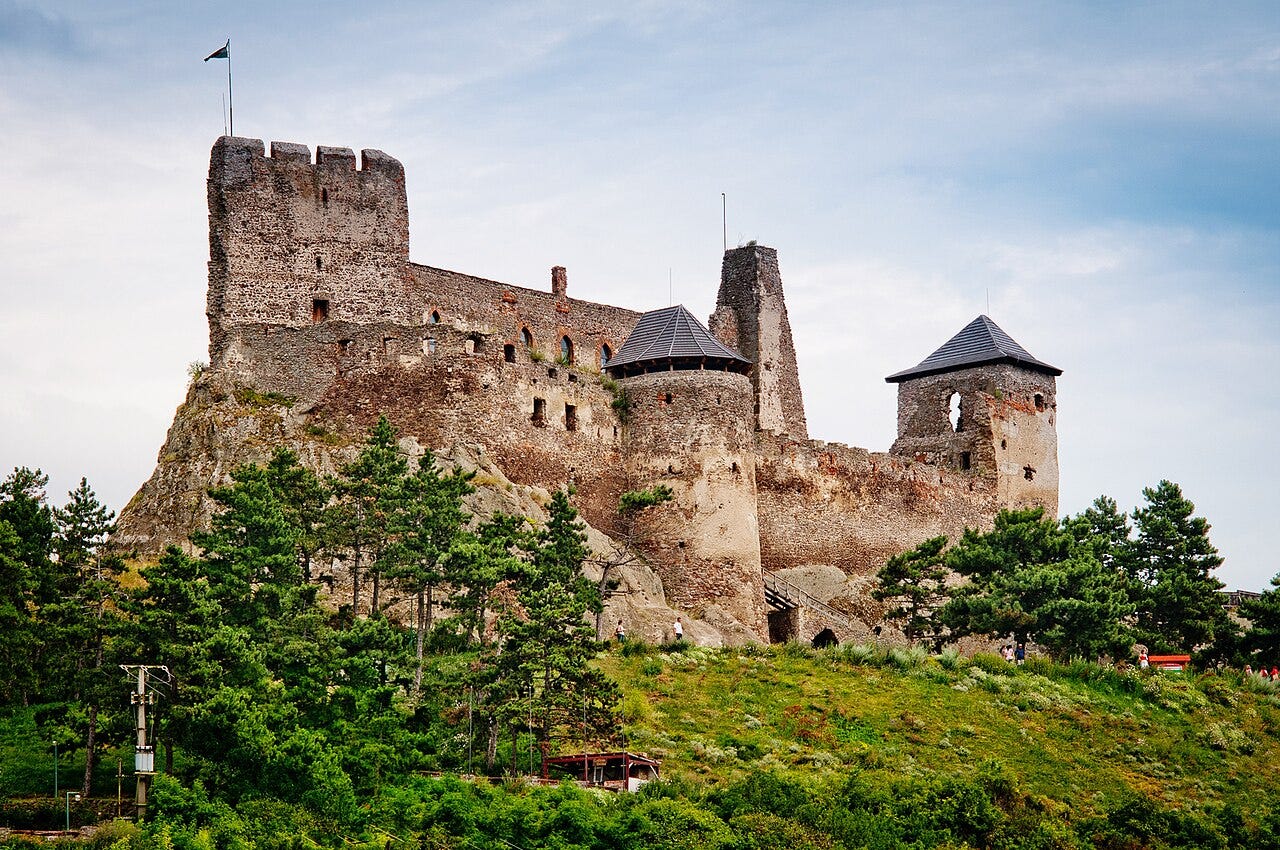
If the Mongols set out small foraging parties, the knights ambushed them. If they sent out large foraging parties, they could not gather enough food to sustain themselves. The Mongols slowly starved. Eventually, when the Mongols were weak enough, the Hungarians would force a set-piece battle and smash them (or threaten such a battle and force them to retreat, the sources disagree). This happened first to the northern army and then to the southern.
It appears that of about 40,000 Mongol warriors, around 5,000 made it back. There was never another substantive Mongol invasion of Hungary, though frontier raids continued. The Hungarians had about 30,000 soldiers: so the Hungarians smashed the Mongols while being outnumbered. The contrast with the failure of the Chinese only a few years earlier is striking.
The Hungarians did nothing particularly remarkable. They just set up, and then applied, the bog-standard Western and Central European castles-and-knights, fortified cities-with-militias, system. In 1345, the Hungarians invaded lands under Mongol (“Tatar”) control, smashed a Mongol army and conquered Moldova. What the Hungarians were not running was a highly bureaucratised state which attempted to internally monopolise armed force.
The warrior-franchise (aka fief) systems of Europe were to prove effective in the long run against the pastoralists, though the farthest eastern version (Muscovy) would not clinch this superiority until the development of gunpowder weapons. Once the European farming-polities had gunpowder weapons wielded by sufficiently drilled troops, then the pastoralists were systematically defeated and conquered. By contrast, the Song were the first major state to have gunpowder weapons, but failed to turn this into a winning military advantage.
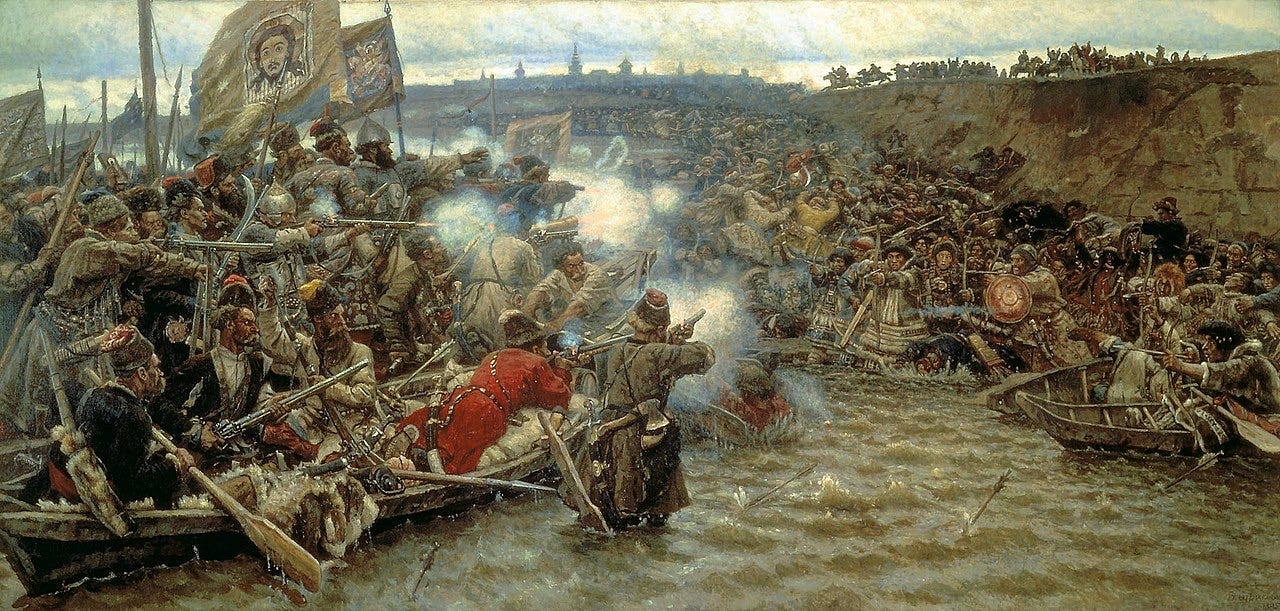
Ottoman success
The pastoralist-origin dynasty of the Ottomans did, eventually, overwhelm the Hungarian kingdom, but that was from adding effective infantry and artillery to their forces and being able to mobilise much greater resources. The Ottomans mobilised the Islamic jihad into a system. The ghazis, holy warriors—typically operating as akinji light cavalry—would raid across the Ottoman frontier, depopulating and economically degrading the enemy (i.e., Christian) borderlands. Eventually, the main Ottoman army would invade and conquer. The ghazis would then move to the new frontier: rinse and repeat. This pattern took the Ottomans from the Anatolian hinterland, across the Balkans, to the heart of Central Europe.
Pope Adrian VI (r.1522-3) received a report from Spalato (Split) a few years prior to the Hungarian disaster at Mohacs (1526):
We are troubled by daily attacks of the infidel Turks; they harass us incessantly, killing some and leading others into slavery; our goods are pillaged, our cattle are led off, our villages and settlements are burned; the fields from which we drew our livelihood are in part laid waste to and in part deserted, for those once worked them have been carried off; and instead of fruit they bear brambles. We defend our safety with our walls alone, and we are content that our Dalmatian cities are not yet besieged … But only the cities are spared, and all else lies open to pillage and rapine. (Quoted in The Krajina Chronicle.)
Islam sanctified the Arabian pastoralist synthesis. This sanctified synthesis included:
Law is based on revelation and controlled by the ulama (religious scholars), apart from qanun: rules for the internal operation of states issued by rulers (i.e., where Sharia is silent). The Ottomans—by having each incoming Sultan re-issue the qanun of the previous Sultan—built up a stable body of administrative law.
Polygyny of up to four wives per husband, apart from “those thy right hand has seized” (ma malakat aymanuhum or milk al-yamin).
Such polygyny meant that low-status males had little or no prospects of marriage within the Muslim community, hence the sanctification of the classic polygynous pastoralist solution of “those people over there have women, steal theirs”, via ...
Sanctification of raiding of non-Muslims who had not submitted to Muslim rule, including enslaving captives and woman-stealing. Thus, an Islamic martyr is someone who dies while fighting for the umma, the Muslim community.
This meant that that Islam could continually generate ghazis. Even today, the polygyny of the oil-rich Gulf states has helped to generate jihadi recruits in the rest of the Muslim Middle East by siphoning off Muslim women and leaving local young men with no marriage prospects. Polygyny is associated with a range of negative outcomes, including increased violence and less investment in the education of children and—in the absence of armed women, such as among the steppe pastoralists—lower status for women. The Muslim grooming gangs of northern England, ISIS’s theology of rape, and the increased rates of rape and sexual assault in Europe are contemporary manifestations of long-standing patterns.
Wielding self-government (or not)
The Habsburgs were able to stymie the Ottoman conquest system by setting up the Military Frontier (Militärgrenze) of fortified villages of free, self-governing, armed-militia peasants able to raid the Ottomans back. This successfully stopped Ottoman advances. After the Ottoman disaster of the Battle of Vienna (1683), the Habsburgs were able to push the Ottomans back.
The Battle of Vienna included what was likely the largest cavalry charge in history (18,000 cavalry led by 3,000 Winged Hussars). The Polish king John III Sobieski (r.1674-1696) replicated Alexander the Great’s classic approach—remembering that Alexander won his set-piece battles leading his Companion heavy cavalry with no bloody stirrups—of using infantry to pin the enemy and then charging through the gap that opened up. History may not repeat, but it rhymes: a lot.
All this was in dramatic contrast to the slow retreat of the medieval Roman state and the failures of ethnically Han Chinese dynasties. Both used militia systems at various times—for example the Chinese fubing militia and its derivatives and the Roman thematic cavalry—but without the sustained success of the Habsburg Military Frontier.
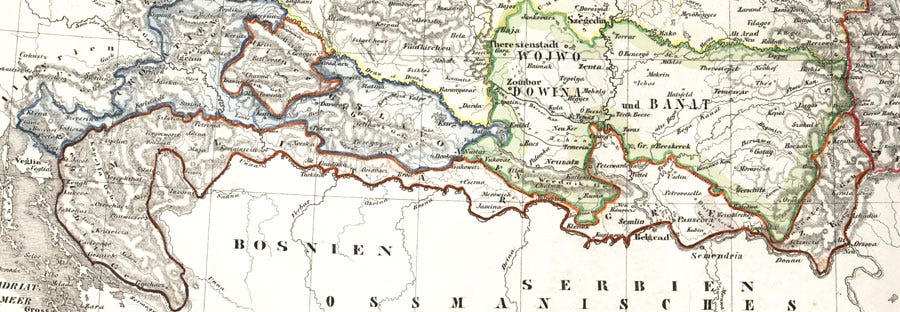
The militarised self-government of the Habsburg Military Frontier villages was antipathetic to the highly bureaucratised nature of both Roman and Chinese government. Indeed, one of the reasons that the Ottoman raid-degrade-conquer pattern was so successful against the medieval Romans (“Byzantines”) was that the medieval Roman state had a long history of accepting the depopulation of frontier districts so as to provide advance notice of incursions without risking too many resources.
The pattern one sees across European Christendom—which the Habsburg Military Frontier was a particularly effective example—of militarised border marches with elevated self-government (such as the County Palatine’s under the English Crown) was simply either not adopted by Rome or China or, if it was, it was then systematically undermined by the central bureaucracy. (The pastoralist Qing dynasty did use tributary allies.)
The bureaucratic states of Rome and China insisted on a state monopoly of organised violence that the warrior-franchise states, and their early modern successors, did not. This distrust of self-governing decision-making meant that both the Roman—from the reign of Diocletian (284-305) onwards—and Chinese bureaucratic states (with the partial exception of the Song) also undermined the commercial vitality of their own societies, and so the revenue (and technological) possibilities of commerce.
Bureaucracy can be excellent at regularising administration. The problem with bureaucracy is that it is also prone to recurring pathologies, as it selects for: complexity and increasing internal resource use; manipulative personalities; evasion of accountability; suppression and/or delegitimisation of alternative sources of information and decisions; elevating process over outcomes. We can see all these pathologies in contemporary Western societies—they were particularly rampant during the response to Covid.
The pattern whereby the Dominate bureaucracy leached away urban self-government inside the Roman Empire is much the same pattern whereby university central administrations have leached university Faculties and Departments of internal support services and decision-making authority. It is this pattern of being both useful and pathological that makes bureaucracy such a conundrum. The more one sees bureaucratic pathologies in operation, the clearer it is that accountability pressures are not strong enough, as such bureaucratic pathologies operate most strongly the weaker effective (rather than notional) accountability pressures are.
From the collapse of the Tang dynasty in 907 to the collapse of the Qing dynasty in 1912—a period of a thousand years—only two ethnically Han dynasties ruled northern China: the northern Song (980-1127)—who were not able to unify all of northern China—and the Ming (1389-1644). Meanwhile, across that same period, two pastoralist dynasties ruled (all of) southern China: the Yuan (1271-1389) and the Qing (1644-1912).
The inner Asian peoples regularly proved more adaptable than the bureaucratically-ruled Han. Bureaucratic domination of China clearly had a lot of problems. Bureaucratic government of Rome also failed: catastrophically in the case of the Western Empire. The Eastern Empire had a mixture of lesser catastrophes—the Arab conquests in the C7th, the Seljuk conquests in the C11th, the Fourth Crusade in the C13th—and grinding slow decline.
The Western Roman Empire—an imperial scale bureaucratised autocracy—was the only European state to suffer a collapse on the scale of a Chinese dynastic collapse (also imperial scale bureaucratised autocracies). Bureaucracy has a strong tendency to consume the resilience of its societies. Warrior-franchise, samurai and daimyo Japan also proved better at dealing with the Western challenge than did bureaucratised Qing China.
It is very much a matter of what the feedback mechanisms are, what the accountability mechanisms and incentives are and whether there are any systematic character tests (such as the duel of honour). The bureaucratic responses to the Mongols and other pastoralists failed sooner or later. The far more responsive warrior-franchise systems worked out what worked and did it. Add in gunpowder warfare (which China invented but failed to master) and final success was achieved.
ADDENDUM: In non-Han regions, various Chinese dynasties did recognise hereditary tribal chieftains under the Tusi system. The long-term tendency was to move in Han settlers and replace them with imperial officials.
References
Douglas W. Allen and Clyde Reed, ‘The Duel of Honor: Screening for Unobservable Social Capital,’ American Law and Economics Review, Vol. 8, Issue 1, pp. 81-115, 2006. https://www.sfu.ca/~allen/Dueling.pdf
John Haldon, Warfare, State and Society in the Byzantine World, 565–1204, UCL Press, 1999.
John Haldon, Byzantium at War AD 600-1453, Osprey, 2002.
Yasheng Huang, The Rise and Fall of the EAST: How Exams, Autocracy, Stability, and Technology Brought China Success, and Why They Might Lead to Its Decline, Yale University Press, 2023.
Dieter Kuhn, The Age of Confucian Rule: The Song Transformation of China (History of Imperial China Book 4), Belknap Press, 2011.
Ira M. Lapidus, A History of Islamic Societies, Cambridge University Press, [1988] 2014.
Victor Lieberman, Strange Parallels: Volume 2, Mainland Mirrors: Europe, Japan, China, South Asia, and the Islands: Southeast Asia in Global Context, c.800–1830, Cambridge University Press, 2009.
Ramsay MacMullen, Christianity and Paganism in the Fourth to Eighth Centuries, Yale University Press, 1997.
Daniel Seligson and Anne E. C. McCants, ‘Polygamy, the Commodification of Women, and Underdevelopment,’ Social Science History (2021), 46(1):1-34. https://www.researchgate.net/publication/354584406_Polygamy_the_Commodification_of_Women_and_Underdevelopment
Tuan-Hwee Sng, ‘Size and dynastic decline: The principal-agent problem in late imperial China, 1700–1850,’ Explorations in Economic History, Volume 54, 2014, 107-127. https://conference.nber.org/confer/2011/CE11/Sng.pdf
Srdja Trifkovic and Michael M. Stenton, The Krajina Chronicle: A History of Serbs in Croatia, Slavonia and Dalmatia, Lord Byron Foundation for Balkan Studies, 2010.
Yuhua Wang, The Rise and Fall of Imperial China: The Social Origins of State Development: 13, Princeton University Press, 2023.
Interesting to read about dynastic and military history from an anthropological instead of “heroic” perspective. Makes it easier to understand more objectively the “pathologies” now being repeated (or rhyming).
The biggest bonus was the embedded Sabatan YouTube. I went down a wormhole learning more about this Swedish metal band and their high production value retellings of significant battles through history.
An interesting post, but it begs a question: have any civilisations escaped the clutches of their own bureaucracies?