

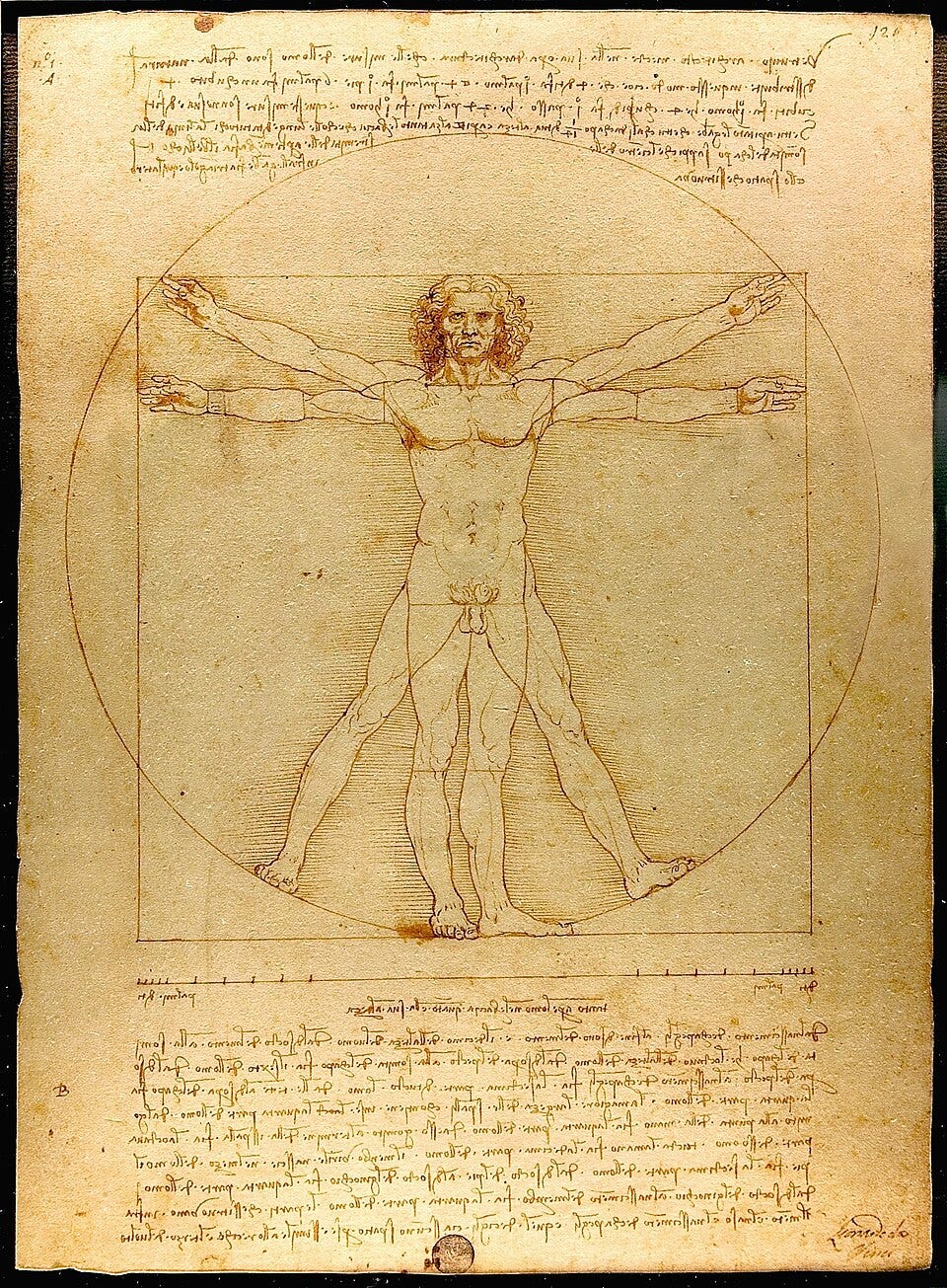
All political and social philosophies rest, implicitly or explicitly, on some claims or claims about the nature of humans.
Consider the thought of Kong Qiu (c.551 BC – c. 479 BC), known as Kǒngfūzǐ (孔夫子) (Great Master or Wise Teacher Kong), hence Confucius. He held that human nature is naturally good and that it is therefore a reasonable aspiration to create a society of harmony, a society without conflict, if everyone just behaves with the propriety appropriate to their place in society—in particular, according to their placement in the web of social connections. His constant concern for the rites (li 禮) is for people to show the correct forms of, and orientation towards, those socially embedded interactions.
This leads very naturally to a very authoritarian, hierarchical view of politics as enforcing social harmony, particularly as people vary in their willingness and capacity to cultivate such virtuous propriety. The notion that politics is legitimately an arena for bargaining between competing interests—the Western idea of “normal politics”—becomes not a natural way to do politics, but a failure to achieve proper harmony.
Master Kong developed his ideas—that were further developed by disciples and commentators—in a civilisation with no tradition of warrior assemblies, self-governing cities, or deliberative assemblies of any kind. A ruler’s court is a place where officials report, and may even debate, but the ruler decides. You can see this narrow view of politics in comments by Master Kong in the Analects such as:
8.14 The Master said, “If you don’t have a particular [government] position, then don’t meddle with any of its business.”
14.26 The Master said, “If you don’t have a particular [government] position, then don’t meddle with any of its business.” Master Zeng [Zengzi] commented, “The gentleman does not allow his thoughts to go beyond what his position calls for.”
In such a political culture, judicious quotes based on mastery of a shared literature become a way of communicating to superiors while giving minimum offence. Conversely, political rhetoric has little or no value, because there are not the deliberative assemblies to be swayed by argument. Master Kong deprecated glib persuasiveness, on the grounds that it tended to hide one’s real character (or lack thereof).
Where command-and-control hierarchy is the dominant method of political action, hoping for propriety to pervade the hierarchy has obvious resonance. Putting such propriety as a mechanism for social harmony is a way to, ironically enough, be persuasive—which requires a positive view of human nature. But it also hugely elevates the moral claims of governorship. Hence comments such as:
2.1 The Master said, “To rule by virtue is like the way the North Star rules, standing in its place with all the other stars revolving around it and paying court to it.”
12.17 Ji Kangzi asked about the way of governing [zheng]. Confucius replied, “To govern [zheng] is to correct [zheng]. When you set an example by correcting your mistakes, who will dare not to correct his mistakes?”
This concern for harmonious propriety is not a world away from ibn Khaldun’s concern for asabiyya. Nor is it so far from recognising the importance of a coherent civic culture in order to maintain robust institutions, which rest on norms and rules. This is a factor that much of mainstream Economics fails to seriously grapple with, leading to incompetent analysis of immigration.
The problem is that this cultural and institutional framework turns the thought of Master Kong, his disciples and commentators, into what is, in effect, one-trick moral propriety politics, however sophisticated other aspects of this tradition may be. The choices of governance are narrowed down to punishment and example:
2.3 The Master said, “If you guide the people with ordinances and statutes and keep them in line with [threats of] punishment, they will try to stay out of trouble but will have no sense of shame. If you guide them with exemplary virtue [de] and keep them in line with the practice of the rites [li], they will have a sense of shame and will know to reform themselves.”
They are reduced to trying to make autocratic command-and-control politics work as a successful long-term project: as the repeated dynastic collapses in Chinese history show, they did not succeed. Indeed, the recurring pattern of Chinese political reformers and reform programs ending badly reflects that such fail to break out of that autocratic command-and-control pattern, so end up being swallowed by its incentive structures—including the long-term pathologies of bureaucracy and the inherent fears of autocrats.
The most thorough attempt to implement ideas based on rú (儒) classicism (“Confucianism”) in Chinese history was the disastrous reign of Wang Meng (r.9-23), who provides an object lesson in overweening Theory leading to disastrous policies. Ironically, Master Kong himself was against such grand theorising:
9.4 The Master stayed away from four things: he did not put forth theories or conjectures; he did not think that he must be right; he was not obdurate; he was not self-centered.
The episode is a particularly disastrous example of Etienne Gilson’s principle that the conclusions of the master are the premises of the disciple, thereby all too readily reducing struggles with complexity to a simplifying dogmatism: a trap that scholarly commentary on The Analects often tried to avoid.
The thought of Master Kong also wanders very close to someone is morally better, not only because learned, but because smart and learned. For instance:
5.9 The Master said to Zigong, “Who is the better man, you or Hui [Yan Hui]?” Zigong replied, “How dare I compare myself with Hui? Having learned one thing, he gives play to ten, while I go only as far as two.” The Master said, “You are not as good as he is. Neither of us is as good as he is.”
This arrogance of the appropriately credentialed periodically led to mass outbreaks of infuriated peasants removing educated heads from elite bodies. The most recent manifestations of this were the Cultural Revolution in China and the megacidal Cambodian horrors under Pol Pot but you can see versions of this reaching back into Chinese history—for example, the massacres by Huang Chao’s rebellion (874-884) towards the end of the Tang dynasty (618-907) and the earlier peasant revolts that brought down Wang Meng.
We can also see the same self-righteous exploitive arrogance of those credentialed with “morally proper knowledge” afflicting contemporary Western societies along with bureaucratic pathologies that have also been a feature of Chinese history—remembering that we Westerners copied the Chinese pattern of bureaucratic selection through examination without considering the long-term patterns of Chinese history. Fortunately, national populism generates a less violent outlet for popular frustrations than Chinese peasant revolts.
Within the analytical framework of rú (儒) classicism / Confucianism, the transactions of commerce become inherently suspicious, as commerce seeks gain rather than virtue. It creates winners and losers via outcomes unconnected to (Confucian) virtue. The amoral—in the sense of not driven by virtue—dynamism of commerce is corrosive of stable harmony:
4.16 The Master said, “The gentleman [junzi] understands what is morally right. The petty man [xiaoren] understands what is profitable.”
The rival school of Legalism—fǎjiā (法家) or the School of fa (incl. law, method)—is not any better in supporting what Western thought saw as normal politics. Legalism takes human nature to be bad, so needing strict control. But the underlying notion is that all human action—certainly, all political action—be directed to upholding the power and authority of the state.
Once again, the notion of politics as an arena for bargaining between competing interests is rendered illegitimate, for such undermines the unity of social action required to fully empower the state. Legalism is also suspicious of the dynamism of commerce and its transactional connections outside the state.
China has rich commercial traditions, but in some ways that is despite the Chinese state, not because of it. Commerce in China has been protected in part—and to varying degrees—by the sheer scale of China and the limited reach of command-and-control bureaucracies. The revenue needs of the Song (960-1279) fostered commercial vitality, the security obsessions of Ming (1368-1644) and Qing (1644-1912) rule tended to undermine the same, while CCP rule has oscillated between the two approaches to an extreme degree.
Even Daoism is not much of a barrier to this uniform social harmony thinking, as its notion of putting oneself in accordance with the Dao, the Way, can easily be read as orienting oneself to a single, shared Dao. Daoism did, however, show some tendency to restrain official intrusion into people’s lives.
As an aside, we can see the limited influence of Confucian thought on Japan, as Japanese politics—with its rival power centres—accepted from very early on that bargaining between political actors was a fundamental metier of politics. Conversely, the elevation of consensus within Japanese society and politics is, arguably, quite Confucian in its celebration of social harmony, though that consensus is supposed to arise out of a bargaining process.
Both Confucianism and Legalism rest on notions of human nature as uniform; that human nature is some X which applies to all humans. Master Kong holds that individuals vary in moral character and understanding, but he also sees that as a soluble problem for establishing social harmony, given discerning leadership and inculcation of pervasive propriety. Any blank slate notion of human nature is also a uniform conception of the human: it is a notion of human nature as a tabula rasa.
The obvious implication of this human uniformity is that properly directed social action—by operating on our uniform human nature—can achieve whatever social transformation is required. So, for example, an all-encompassing social equality is possible, precisely because we share, in some deep sense, a common, uniform, human nature.
This is, of course, the underlying claim of communism, including Marxist Communism. From each according to his abilities, to each according to his needs, may look like it accepts the diversity of the human, but it does not really, for it assumes that uniform emotional reactions can be achieved. Specifically, that our profoundly and inherently social “species-being” can be realised if social action goes on the correct path.
CCP Confucians
We can thus see that a contemporary puzzle—why the Marxist-Leninist CCP, the Chinese Communist Party, has taken up pushing a form of Confucian thought, both domestically and externally—becomes much less of a puzzle. Marxism and Confucianism share an underlying notion that overt political bargaining is illegitimate; that pervasive social harmony is the proper goal of political and social action; that the proper hierarchy in charge of morally correcting the populace will achieve this; and that politics should be directed to the welfare of the people. Though the last has so often been legitimating rhetoric rather than actual practice.
The proper hierarchy in this case being accepting the right, authority and need for the CCP to direct—indeed correct—Chinese society at all levels. After all, the claim that Communists who have mastered correct Theory should have a guiding role in the transformation of society is explicitly stated in The Communist Manifesto:
The Communists, therefore, are on the one hand, practically, the most advanced and resolute section of the working-class parties of every country, that section which pushes forward all others; on the other hand, theoretically, they have over the great mass of the proletariat the advantage of clearly understanding the line of march, the conditions, and the ultimate general results of the proletarian movement.
The notion that the democratic centralism of Leninism is some profound distortion of Marxism is simply not true. It is the operationalisation of Marxism based on claims already in The Communist Manifesto.
Authoritarian politics seeks to control what you do, at least within the realm of politics. Totalitarian politics seeks to control who you are, within all social realms.
Hence totalitarians seek to seize control of the means of production of humanity. Communists seek to seize control of the economic means of production of people; Nazis of the racial means of production of people; Fascists of the means of production of the nation, via the state. The varying conceptions of the means of production of humanity depends on what is taken to be the key to what and how we are.
Legalism—fǎjiā (法家) or the School of fa (incl. law, method)—is clearly resonant with Fascism, though without the overt nationalism, as it in evolved in the Warring States period (c. 475 – 221 BC) whose states were all Chinese.
Antonio Gramsci, the Frankfurt School and Mao all zeroed in on seizing the means of cultural production of humanity. Though Mao utterly despised Confucianism, this cultural turn has since given the CCP another point of resonance with Confucianism.
This is especially so, given how much the CCP leadership in general—and Xi Jinping in particular—is driven by the trauma of the collapse of the Soviet Union. The aim is both to maintain sustaining belief (asabiyya in ibn Khaldun’s analytical framework) within the CCP and, via an adjusted Confucianism, moral resonance with wider Chinese society—including the Chinese diaspora.
From whence conflict?
If human nature is uniform—and the achievement of full social and political harmony is the proper goal—then the question arises: why is there conflict in society? The Confucian answer is a failure to follow propriety. The Legalist answer is because the bad impulses of humans are not being properly controlled and repressed by state action.
The Communist answer is, in the case of Marxism, class conflict. The deeper answer—in all forms of Communism—is private property: an idea that predates Marx. For private property alienates us from our shared, inherently social, nature. It creates divergent interests that create classes that create social conflict. The solution is obvious—get rid of private property.
If human nature is uniform—or can be reasonably moulded to be so—then full social equality is achievable. Put everyone in the same social conditions, they will act in the same way, have the same emotional reactions and we will get profound social equality—at least in the sense of a society without classes and class differentiation.
The “root causes” delusion
The common pattern in these philosophies of uniform human nature is that, if humans have a common, uniform nature, then negative differences cannot come out of our uniform human nature, they must come from social causes. From this you get the search for the “root causes” of social conflicts and social pathologies.
These “root causes” have to be social, they cannot come from inherent disparities and varieties among humans, because a uniform human nature cannot generate such. If human nature is sufficiently uniform, there is no people unlike me problem.

Except, of course, there very much is a pervasive people unlike me problem. The thing to understand about these claims of a uniform human nature is that they are profoundly false.
Human nature is not a uniform thing, human nature is a distribution of traits that differ between individuals. Moreover, different human groups will have different distributions of traits. This is an inevitable outcome of us being evolved beings; of all our social capacities resting on our genetic capacities; of different human lineages evolving in different environments for long enough; and us being immersed in varying cultures.
If one finds it difficult, or impossible, to think statistically, then this inherent variety in the distribution of traits, and its implications, become hard to get your head around. Identitarian thinking is, at its base, reassuringly simple thinking, no matter how much verbal prolixity is built on top of its underlying simplicity.
This base idea, this fundamental claim, that human nature is uniform is why left-progressivism is regularly so profoundly hostile to evolutionary science being applied to humans. Because one thing evolution absolutely says is that traits will differ between individuals AND their distribution will differ between human groups.
Any attempt to apply uniform human nature thinking to any area of public policy will therefore quite fundamentally mis-diagnose the human dynamics involved. But if differentiated social outcomes can only have social causes, then all failures to achieve the desired outcomes must themselves have social causes. Hence the doubling-down on failure and the endless search for the wrong-thinkers who are causing the grand social transformation not to work. The demand for a pervasive social harmony—rather than just a workable social order—requires repressing, expelling or just killing those who fail to conform.
In order-versus-chaos moral metaphysics—which you get in farming and pastoralist societies as survival depends on the regular pattern of the seasons sustaining crops and herds—the celebration of order, as in the Egyptian concept of maat, the Mongol concept of tore or the Chinese concept of dao, can lead to a harshness against what are seen as chaotic or disordering persons.
Ramp that up with a strong notion of harmony, and you can get execution of entire families or clans as disordering elements. The most extreme version of that is the nine familial exterminations.
Conversely, peace, order and good government invokes a much less intense notion of social order that goes with a notion of ordinary politics based on bargaining between different interest groups and viewpoints. It is precisely because the status games that have become dominant among Western elites are derived, via Critical Theory, on meditations on Marxism—so invoke a strong notion of social harmony achievable through social action acting on uniform human nature—that we see the attacks on freedom of speech attempting to enforce control of social legitimacy by enforcing what is “acceptable” discourse, “acceptable” social and political concerns, and so “acceptable” voting.
As Western elites have lost authority—through their own incompetence; their multi-level attacks on the interests, concerns and heritage of their working classes; and the opening of the information flood gates—they have attempted to double-down on control. They coordinate via moralised status games whose animating ideas both lead to bad policy and justify that doubling down on control.
Crime realities
We can see this clash between false understanding of inherently varied human traits and “root causes” thinking based on all differences having social causes—due to human nature being uniform—in a recent manifestation of such thinking: the defund-the-police push, which itself rests on abolish-the-police thinking.
The evidence is very clear: violent crime is a power-law phenomenon.
A Swedish population study found that one per cent of people—overwhelmingly, as in 94 per cent, male—generate 63 per cent of violent crimes. Four per cent of people (almost 90 per cent male) generate all the violent crime. Thus, seven per cent of males, and less than one per cent of females, generated all the violent crime. This is a classic manifestation of how human variation can lead to dramatic differences in behaviour due to differences in underlying traits.
Thus, the way to control violent crime is to effectively police a community so as to remove from society—or otherwise effectively deter—that small, highly violence-prone, minority. Such policing includes playing attention to the social architecture and dynamics of localities, given that localities wildly vary in their level of crime precisely because crime is such a power-law phenomenon due to human variation.

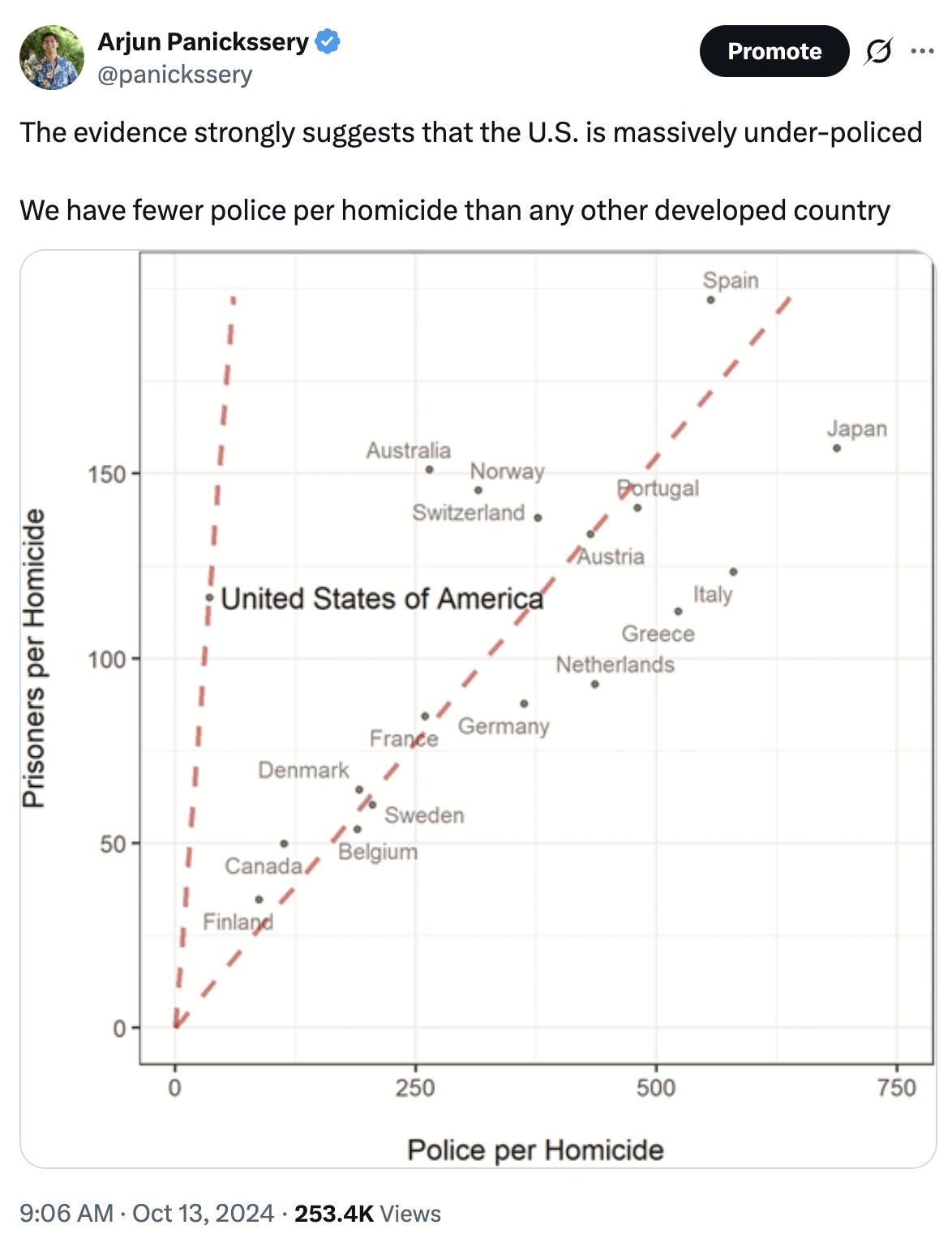
Specifically, effective crime policy requires policing effectively the small minority of (overwhelmingly male) humans very prone to reactive aggression, as such aggression dominates violent crime. Given genetic differences in the distribution of traits between human groups, the size of that highly reactively aggressive minority varies between human populations—a factor that can be amplified or reduced by culture. Human populations therefore generate different propensities to violent crime and so different levels of need for effective policing. Thus, the US is, ironically, a severely under-policed society.
The failure to grapple with the—ultimately genetic, though mediated by culture—reality of human variations pops up in lots of places, because so much human political, and even economic, theorising is pre-Darwinian in its roots. That is, its base ideas were developed before Charles Darwin published The Origin of Species (1859) and The Descent of Man (1871) and/or have not been updated in the light of what evolutionary biology and evolutionary anthropology tell us.
For example, Libertarianism postulates a sufficiently uniform level of executive function to make its vision of social order work that, in fact, does not exist. Much of mainstream Economics postulates that everyone is a uniform economic agent. In particular, mainstream Economics regularly analyses immigration on the basis of a patently false claim: that immigrants can be treated as undifferentiated—in all the relevant senses—economic agents.
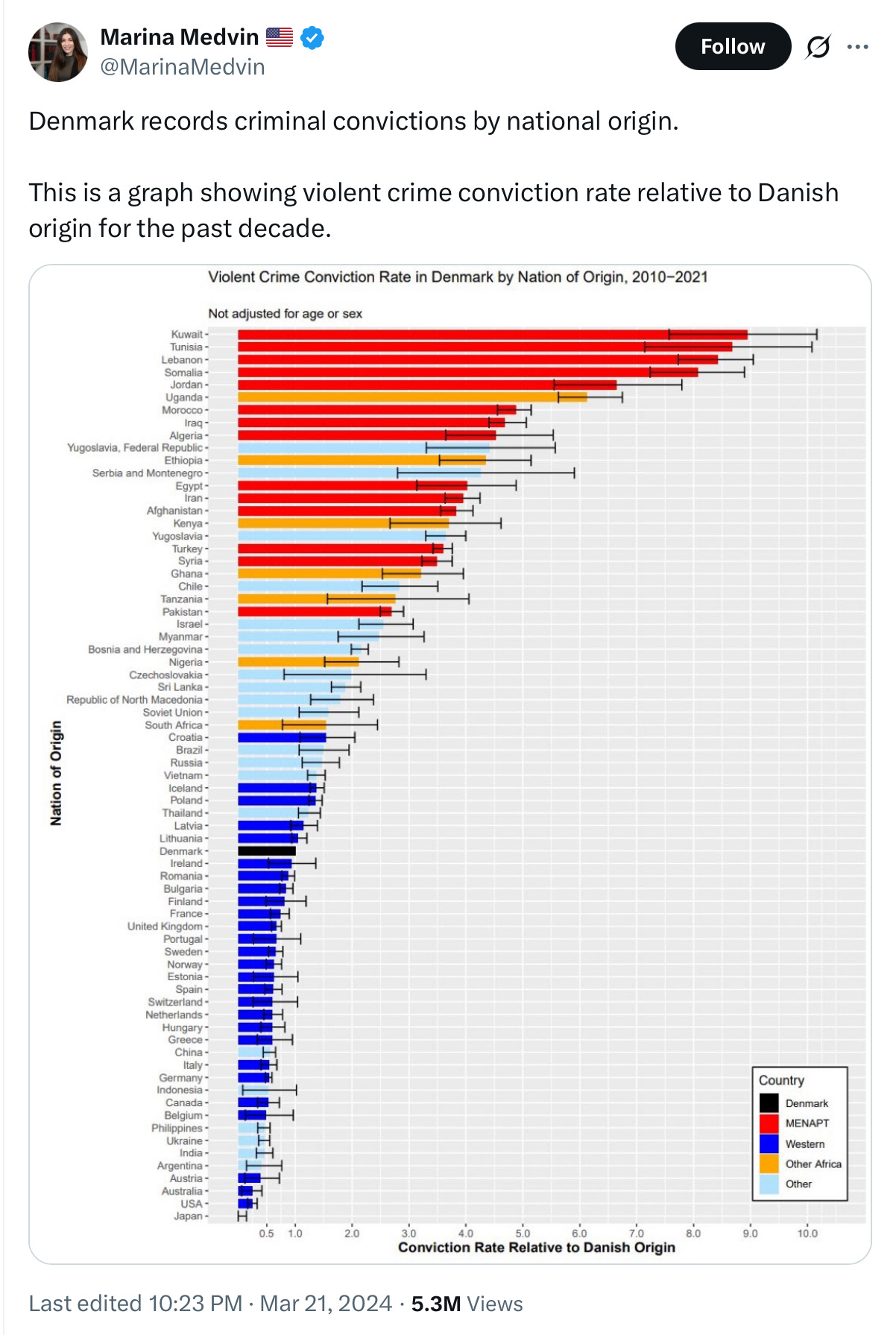
There is the further difficulty that we human cognitively model significance, not facts. Moreover, we spend around two decades immersed in particular social milieus before we become significant economic transactors. The consequence of that is people vary, sometimes dramatically, in their cognitive framings (aka culture). People in the same circumstances will behave differently precisely because they are using different cognitive framings.
Philosophy versus law
Going back to Chinese thought, China shares with India and Classical Greece two features—having highly developed traditions of philosophy while being bad at law and legal reasoning.
Legal reasoning is a very particular, and not very natural, form of reasoning. It requires rigorous application of reasoning through analogy. One has to work out what and how some type of human action or human-connected thing is—or is not—like other types of human actions or human-connected things and what principles apply: including the relevant trade-offs.
Philosophy regularly displays three vices antipathetic to good legal reasoning: too much abstraction; nitpicking beyond the useful; missing one or more key factors.
Abstraction is compression. Not having law’s grounding in concern for specific sets of circumstances, it is very easy for philosophy to abstract in a way that does not work—for example, postulate a uniform human nature.
Philosophy can get wrapped up in nitpicking way beyond the useful. Law needs enough differentiation and categorisation to apply to the facts and circumstances of the case in question, and no more. Lacking that grounding, philosophy can get lost in nitpicking that turns into useless, even toxic, purity spirals. When you get intellectual “problems” that are purely problems within, or for, some Theoretical framing, you are in the world of useless nitpicking. This is how Analytic Philosophy finished up among the most genderwoo captured of all disciplines, while lawyers just fought among themselves.
The final problem is that philosophy, in its abstracting and nitpicking, can just miss key factors. A key part of law is working out what is relevant in a given situation, all while addressing actual human interactions. In its far less grounded abstracting, philosophy can absolutely miss out one or more key factors. Such as, for example, failing to deal accurately with human variation that we now know is an inevitable consequence of us being evolved beings with varying genes and cultures.
Every philosophy that postulates a uniform human nature displays these failures.
By contrast, the two great legal traditions—Roman (aka Civil) law and common law—come out of a deeply practical civilisation (Rome) and culture (England) that developed their rich legal traditions well before they developed any local philosophical tradition.
Toxic telos
Another consequence of claims about a uniform human nature is this readily becomes the claim that human history has a telos, a proper direction. This is not the same as saying society has a proper form. Confucianism can claim that society should be able to constituted to be fully harmonious; Legalism can claim that society should uphold the authority of the state; without either claiming that history has an inherent direction.
Both Confucianism and Legalism are entirely compatible with a cyclical view of human history. Order-versus-chaos views of human society—which both Confucianism and Legalism arose within—rather naturally take a cyclical view of human history.
Good-versus-evil moral metaphysics, on the other hand, lend themselves to a notion that history has a telos, a direction—specifically, the final triumph of good. This seems to have specifically been injected into the religious history of humanity by Zarathustra (Zoroaster).
A notion that history has a telos, a direction, does not require a notion of a uniform human nature but if you marry the claim of a uniform human nature to a good-versus-evil moral metaphysics, then it becomes very natural to make the claim that history has a telos, a direction. That telos, that direction, being the final manifestation of our uniform human nature—uncorrupted by social pathologies—into a fully harmonious society without class conflict or other such divisions. This becomes the final good to which all proper human action is directed. This is a form of social salvation that generates salvational politics: politics that reproduces the patterns of salvational religions—including heresy hunts, excommunications, and denunciations of blasphemy.
The incorporation of all proper human action includes all proper human political action. Once you conceive of history as having a telos, a direction, that also incorporates political action, various consequences follow.
One consequence is that you have a way of grading human political choices that de-legitimates all “wrong” choices—including “wrong” electoral choices. You have adopted a principle that trumps democratic choice—we can see this operating in the EU with its “ever closer union” principle that is clearly used to grade electoral choices.
Second, the notion that politics is legitimately the process of bargaining between different interests either gets completely over-ridden or very strongly curtailed—being limited only to “right-thinking” folk who act in accord with that telos. You end up with a notion of “our democracy” where right-thinking folk get to grade which political choices are legitimate or not.
Nowhere is this tendency clearer than the de-legitimising of all forms of national populism.
As sociologist Musa al-Gharbi so well analyses, whatever else “woke” is, it has generated, and mainly manifests as, a set of moralised elite status games. This set of elite status games comes out of various derivations of Critical Theory. All those derivations from Critical Theory are based on meditations on Marxism. This means that they claim that history has a proper telos, a proper direction; that human nature is uniform; and that all social pathologies have social causes. They are also conspicuously hostile (in whole or in part) to the application of evolutionary thinking to human affairs. They are especially hostile to the notion that distributions of traits varies among human groups.
This set of moralised elite status games very much grades (other people’s) political and electoral choices as legitimate or not and their contributions to public discourse as legitimate or not. It also very clearly sees political bargaining as only being legitimate among right-thinking people. Those committed to such (highly moralised) status games are deeply hostile to freedom of speech and thought, and to electoral choices as having authority able to be asserted against such right-thinking people.
These elite status games also clearly lead to bad public policy. They lead to bad public policy not only because they are committed to blocking all sorts of inconvenient feedback but also because they are based on claims about human nature—and thus about human social dynamics—that are demonstrably false.
Either these destructively pre-Darwinian ideas are purged out of public policy, and our institutions, or their combination of falsity plus their war against truth (for that is what it is), freedom and feedback—including democratic feedback—will lead to cascading policy and institutional failures and various levels of civil strife.
The claim that we have a uniform human nature is false, and nothing good can be built from it.
References
Mikael S. Adolphson, The Gates of Power: Monks, Courtiers, and Warriors in Premodern Japan, University of Hawaii Press, 2000.
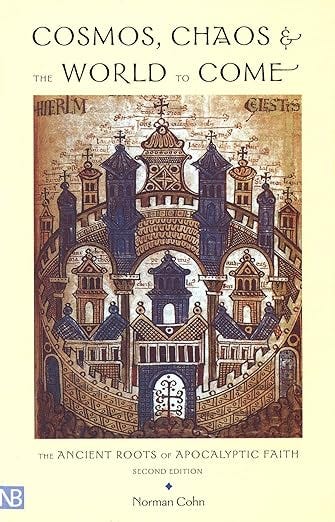
Norman Cohn, Cosmos, Chaos and the World to Come: The Ancient Roots of Apocalyptic Faith, Yale University Press, [1995] 2001.
Confucius, The Analects, (trans. with introduction by D.C. Lau), Penguin, 1979.
Confucius, The Analects (Lunyu), (trans. with introduction and commentary by Annping Chin), Penguin, 2014.
Roger Eatwell and Matthew Goodwin, National Populism: The Revolt Against Liberal Democracy, Pelican, 2018.
Laura E. Engelhardt, Daniel A. Briley, Frank D. Mann, K. Paige Harden Tucker-Drob, ‘Genes Unite Executive Functions in Childhood,’ Psychological Science, 2015 August, 26(8), 1151–1163. https://pmc.ncbi.nlm.nih.gov/articles/PMC4530525/
O¨rjan Falk, Ma¨rta Wallinius, Sebastian Lundstro¨m, Thomas Frisell, Henrik Anckarsa¨ter, No´ra Kerekes, ‘The 1% of the population accountable for 63% of all violent crime convictions,’ Social Psychiatry & Psychiatric Epidemiology, 2014, 49, 559–571. https://pmc.ncbi.nlm.nih.gov/articles/PMC3969807/
Musa al-Gharbi, We Have Never Been Woke: The Cultural Contradictions of a New Elite, Princeton University Press, 2024.
Etienne Gilson, The Unity of Philosophical Experience, Ignatius Press, [1937] 1964.
Herbert Gintis, Carel van Schaik, and Christopher Boehm, ‘Zoon Politikon: The Evolutionary Origins of Human Political Systems’, Current Anthropology, Volume 56, Number 3, June 2015, 327-353. https://pubmed.ncbi.nlm.nih.gov/29581024/
Martin Gurri, The Revolt of the Public And The Crisis of Authority in the New Millennium, 2014.
Glenn C. Loury, The Anatomy of Racial Inequality: The W.E.B Du Bois Lectures, Harvard University Press, 2002.
Jens Ludwig, Unforgiving Places: The Unexpected Origins of American Gun Violence, University of Chicago Press, 2025.
Debin Ma & Jared Rubin, ‘The Paradox of Power: Principal-agent problems and administrative capacity in Imperial China (and other absolutist regimes),’ Journal of Comparative Economics, (2019), 47(2), 277-294. https://digitalcommons.chapman.edu/esi_working_papers/212/
Emily M. Norman, Devon L. L. Polaschek and Nicola J. Starkey, ‘Executive function in individuals who are compliant and non-compliant with the conditions of a community-based sentence,’ Psychiatry Psychology and Law, 2022 Feb 10;30(2):161-176. https://pmc.ncbi.nlm.nih.gov/articles/PMC10026818/
Nathan Nunn, ‘Culture And The Historical Process,’ NBER Working Paper 17869, February 2012. http://www.nber.org/papers/w17869
Jordan Peterson, Maps of Meaning: The Architecture of Belief, Routledge, 1999.
Tuan-Hwee Sng, ‘Size and dynastic decline: The principal-agent problem in late imperial China, 1700–1850,’ Explorations in Economic History, Volume 54, 2014, 107-127. https://conference.nber.org/confer/2011/CE11/Sng.pdf
Timothy Snyder, ‘Commemorative causality,’ Eurozine, 6 June 2013. https://www.eurozine.com/commemorative-causality/
Richard W. Wrangham, ‘Two types of aggression in human evolution,’ PNAS January 9, 2018, Vol.115, No.2, 245–253. https://www.pnas.org/doi/10.1073/pnas.1713611115
The specification of uniformity in human capabilities, behavior, and character seems to be so obviously wrong, based on simple observation, why would such views have developed or retained any validity? A civil approach that aims to round off the rough edges, but otherwise allows for "lumpiness", would appear to be more optimal, and more realistically achievable.
It should not really take an awareness of evolutionary sources for various traits to accept that they exist. Plus, once we had the benefit of Darwin's theory, exploring and separating the contributions from natural/genetic components and cultural/nurturing ones would seem to be a fully logical and de rigor aspect of social analyses.
Of course, one of the all too common human traits is that of "Karens" who just cannot leave the rest of us alone, but must make us over into their flawed images and purposes. And the more charismatic ones become positively dangerous to individual liberty, and thus to a sane civil order.
Fantástico post!!!