

Some time ago, I was intrigued by how China managed to have a massive commercial take-off well before it legalised private commercial property (in 2004). I therefore wrote a 12,000 word essay on the origins and dynamics of property. That is far too long for a Substack post, so I have broken it up into a series of posts.
The first post established that property predates the state or the law. The second post examined how property could operate outside—or even against—the law. The third post looked how pervasive conventions are, the uses of law, pacification, and different institutional paths. This post covers owning people and animals plus regulation as control of attributes.
Property as relationships between people and claims on people …
So, if property-as-a-thing-people-do is based on convention, as it is, then that means that property is not a relationship between people and things. It is a series of relationships between people about things: specifically, rights-to-decide. Things being anything that can be acknowledged by others as being owned, so extends to living things: including, in the case of slavery, other humans.
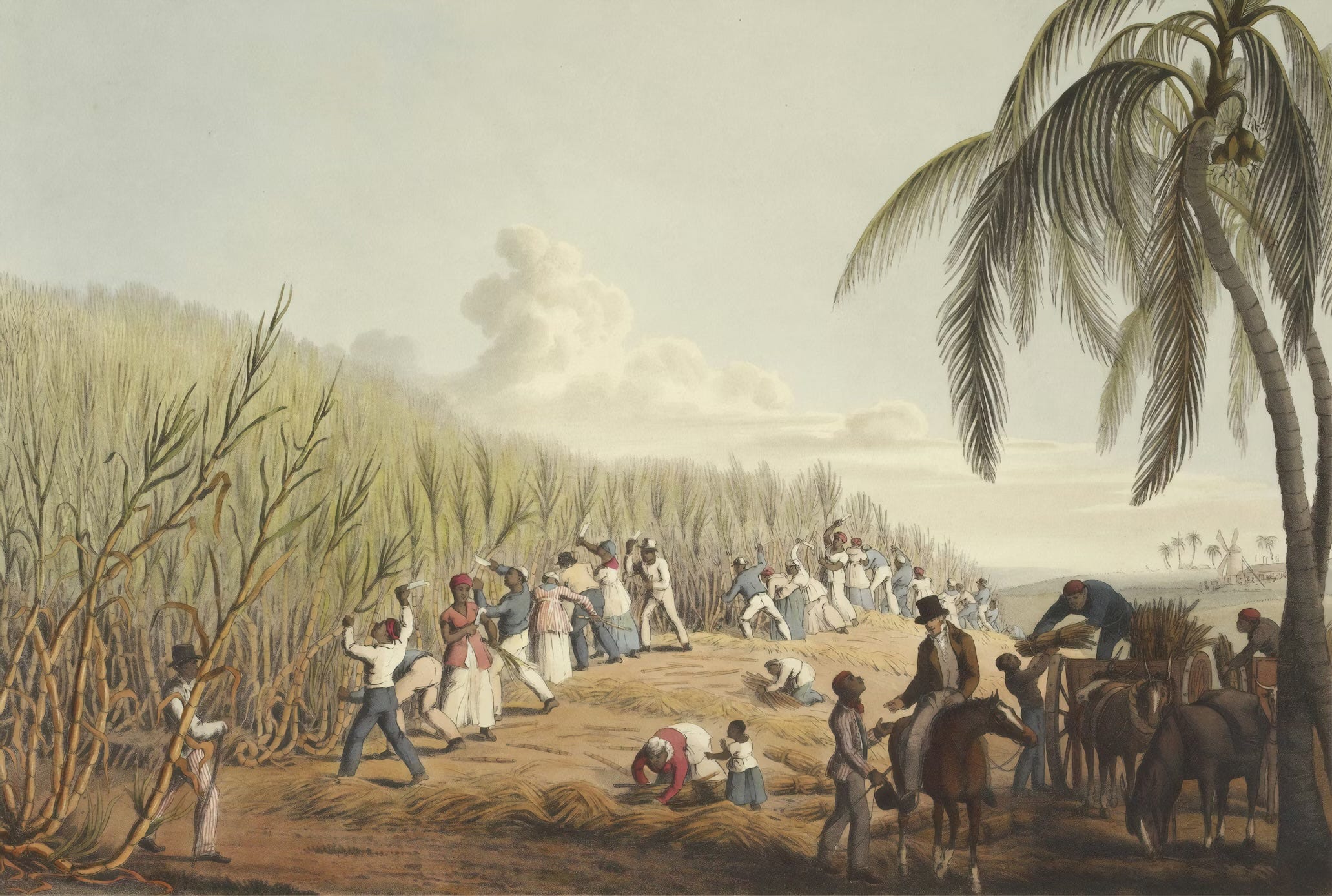
For if black markets—property not merely outside but against the state—are one boundary case of property-as-convention then slavery, the ownership of another human being, is another. To say, however, that a slave is owned is not to say that ownership of another is the central fact of the slavery. On the contrary, ownership is a legal way of expressing the relationship of domination by one human being over another that we call slavery. Slavery represents turning a human into something that not only can be, but is, owned.
Humans can have all sorts of claims on another. Spouses have claims in each other that may extend past the dissolution of the marriage: hence alimony. A sporting team has a claim over the use of the skills of its contracted players. The holder of the estate to which a serf or similar bonded labour is bound has rights over the labour of said bondsperson. They all operate, to varying degrees, as forms of property—even to able be sold or transferred as such.
Kin-groups have typically operated on the basis of having property in the wombs of their daughters. (Dis)honour killings represent murdering daughters for failing to conform to the conventions of such womb-ownership, with the inciting (often female) and killing (usually male) family members murderously signalling commitment to the kin-group or community and the norms thereof. One of the ways that Christianity is corrosive of kin-groups is by insisting on mutual consent for marriage.
Human resource-use operates in five basic social modes: common-access, sharing, exchange, gifts and coercion. Connections operate across these social modes. Gifts are investments in connection. They are ways of signalling commitment to the connection. Contracts, or any transaction that extends across time periods (such as employment), generate connections that have to be managed. Sharing involves active contribution—as with food, especially hunted food, within a foraging band. Public spaces are shared, but in a much more passive sense.
These resources-and-risk forms interact with modes of status-interaction famously described by anthropologist Alan Page Fiske:
In communal sharing, people treat all members of a category as equivalent. In authority ranking, people attend to their positions in a linear ordering. In equality matching, people keep track of the imbalances among them. In market pricing, people orient to ratio values. Fiske, (1992).
Fiske’s schema ties the mode of resource interaction too closely with specific norms of social interaction. So, in a foraging band, food may be shared by a presumption of equivalence. In a feast, however, there may be a very clear hierarchical ordering. Participation in a common activity may depend on contribution but different types of contribution may be weighted in different ways: effort, risk, scale, value. Sharing can be structured in different ways. All these status-interaction modes come with associated conventions and social norms.
Active-sharing and common-access both work better if they are structured, so do not have to be continually renegotiated. We use conventions and norms to negotiate and navigate common spaces (parks, walkways, corridors, lifts, foyers …). Structured-sharing, common-access, gifts and exchange are all regularly embedded in, and interact with, social connections.
Thus, in social exchange, the exchange is embedded within a web of connections. In commercial exchange, any connections are a consequence of the exchange. These are all aided by the gain of signalling your value as a social interlocutor.
Many cultures recognise the guest-host relationship as one of particular significance. Such hosted-feeding is a gifting, embedded in, and strengthening, connection. Selling a restaurant meal also involves hosted feeding but is a commercial exchange, that has no inherent connection implications.
A commercial exchange is balanced, a matter of an intersection of valuations. Gift-transfer networks operate via imbalances that shift back and forth with each gifting, swapping back and forth the signalling of continuing commitment to the connection. (Gifts can also signal a permanent imbalance in the relationship.)
While we currently do not hold that spousal claims can be sold, sale of such claims has happened in the past, as has sale of concubines and daughters. Societies with some form of bride-price typically have seen them as a form of exchange. Though they were usually social exchanges rather than commercial ones, as they were embedded in, and often sought to create or strengthen, social connections. Indeed, the sole feature common to marriage across all cultures—beyond creating the social role of father—is that it creates in-laws, kin-by-marriage.
Slavery as domination
As sociologist Orlando Patterson (b.1940) has observed:
It is impolite to say of one’s spouse or one’s debtor that they are part of one’s property. With slaves, politeness is unnecessary. (Slavery and Social Death, P.22)
What makes a slave different from a wife, professional player or even a serf is that a slave is in a state of social death: they have no claims of social connection that their master (or anyone else) need pay attention to beyond that to the master.
This is not to say slaves have no legal personality—all slave systems are very well aware that slaves are people. Rather, the relationship of exclusive domination was such that they had no connections that anyone had any obligation to respect other than to their master.
Other individuals might be in relationships of servitude under a master but still retained connections with others subject to presumptive respect. This was true even of serfs and is what distinguishes various forms of serfdom from slavery. Even under Russian serfdom, a serf marriage was a legally recognised marriage; a serf father had legally recognised authority over his family; a serf could legally own property. Once somebody had suffered the social death of slavery, they were utterly bereft of any such connections.
Both serf and slave lacked any choice of master or about the nature and content of that mastery: that is what makes both forms of labour bondage. Nevertheless, a serf had legally recognised relationships, and choices about them, that a slave simply did not.
Slaves are violently dominated: the whip or equivalent has been a control device in every known system of slavery. They are natally alienated: both from from any (positive) standing from their ancestors or claims over their descendants. They are culturally degraded: whether in naming, clothing, hair style, marks on the body or required acts.
All this serves to establish, mark and reinforce the relationship of domination. For that level of domination is required to turn one human into the possession, and so the property, of another. (Karl Marx’s talk of “wage slave” is not only rhetorical excess, it is contemptible rhetorical excess: a manifestation of his comprehensive mischaracterisation of commerce.)
None of these key features of domination require the acknowledgement of the wider society. There are likely slaves in every major city in the world, even in economically highly developed democracies with the rule of law.
While it can be helpful to have your relationship of domination over a slave recognised by others, the crucial thing is the acknowledgment by the slave. Slavery is a relationship between people about an owned thing, where the slave acknowledges that they are the owned thing. This is a key element in the humiliation of slavery.
The mechanisms of domination are, however, obviously much more powerful if they are embedded in wider institutional acceptance of slavery. Where there is no such wider acknowledgement, then even greater isolation from the wider society is required to establish and maintain the relationship of domination.
In social systems that openly incorporate slaveholding, a slave’s state of domination, of the social nullity of no independent connection, normally meant that they could not be a formally recognised owner of property: that they could not be a legal owner of property, not a person who could have property. They lacked the sort of legal standing that could legally own things.
To do so would require the slave to have social and legal connections, beyond the claims and decisions of their master, that others are bound to accept or respect, and that is precisely what slavery, as a structure of domination of one by other, denies. The Ahaggar Tuaregs express this feature of slavery very directly, holding that:
without the master the slave does not exist, and he is only socializable through his master. (Slavery and Social Death, P.4.)
Slavery is, always and everywhere, a created relationship of dominion. As the Kel Gress group of the Tuareg say:
All persons are created by God, the slave is created by the Tuareg. (Slavery and Social Death, P.4)
In a society that accepts slavery, the conventions of acknowledged possession will operate for the master about the slave in a far more complete way than any other claim of property in another human. If other mechanisms of delegated control were sufficiently absent or attenuated, then slaves became preferred agents. The use of slaves as commercial agents was surprisingly common.
In societies dominated by kin-groups, slaves could make preferred warriors or officials precisely because they had no other connection entitled to presumptive respect than that to their master—hence the slave warriors of Greater Middle Eastern (Morocco to Pakistan) Islam.
Escaping the kin-group trap

Islam produced slave warriors (ghulam, mamluks, janissaries) on a scale no other civilization did. This pattern of militaries based on slave warriors lasted from early to mid-800s to the early to mid-1800s.
The danger of kin-groups is that they readily colonise social institutions—rulers come and go, the kin-group is forever. Slave warriors and officials were a solution to that problem in societies where suppression of kin-groups was not a practicable option.
Imperial China found kin-groups useful for economising on administrative costs and Emperors used distance—officials could not be assigned to their home counties [province]—and rotation of officials to inhibit kin-group colonisation of their administrations. Even so, much of the appeal of eunuchs to Emperors was precisely the presumed severing of kin-group ties. (They also had the advantage of being the only males, other than the Emperor, permitted overnight residence in the imperial palace.)
Nevertheless, slavery can exist without such wider acknowledgement by laws. For turning someone into a slave requires forcing them to acknowledge the relationship of domination to the point of being a possession of another.
So, slavery is not, at its core, a matter of property but of domination. Domination to the extent that the conventions of acknowledged possession can apply to slaves entire. Slaves can be turned into property without any other connections with presumptive respect or standing. Yet, even a slave could be a beneficial participant in the conventions of acknowledged possession.
For, so powerfully useful are the conventions of acknowledged possession, that masters have, surprisingly often, allowed slaves to also be accepted beneficiaries of the conventions of acknowledged possession. To be owners of property in practice, if not in law. This was done to lessen the burdens of control, the cost of subsistence or to enable the slave to buy their freedom. The Romans acknowledged this through the concept of peculium.
The Romans, being relentlessly logical in such matters, held a slave to be an owned animal. That is, a human on which such a comprehensive social death has been imposed that they are the legal equivalent of a domesticated animal. (Yet, somewhat awkwardly, still people.)
Just as you can geld an animal, you can castrate a slave. Despite the Islamic slave trade being on a comparable scale to, and lasting centuries longer than, the Transatlantic slave trade, there is no ex-slave diaspora within Islam, unlike the Americas. All children of a Muslim father are members of the Muslim community while so many of the male slaves were castrated.
The Roman concept of property as dominium, as absolute ownership of a thing, may have transferred the domination of slavery into a more general conception of property so as to absolutely separate slave (who suffers dominium) from citizen (who possesses it). Rome ran one of the most open slave systems in human history, such that a freed slave could become a citizen. This necessitated particularly sharp legal delineation of the difference between slave and citizen.
Such dominion is not a relationship between a person and thing (despite claims to the contrary) for it is still setting up a relationship with others regarding what is owned, remembering that the crucial thing in property is not mine! but yours!: the acknowledgement by others of possession and so the right-to-decide. Hence the importance of the signals of possession for slavery.
The Greeks also had citizenship and—particularly in the case of Athens—mass slavery. Greek citizenship was, however, far more exclusive than Roman citizenship and the existence of metis, resident non-citizens, further separated citizen from slave. The Greek city-states also operated much more convention-based, and distinctly less developed, laws than did Rome. If law is a matter of such abstraction as is needed to establish functional differences, and no more, the Romans perhaps felt more need to establish that a citizen could possess dominion.
Conversely, as Romans were not moral universalists, they felt no need to generate some justificatory abstraction about slavery: a slave was simply a loser. If a slave later became a Roman citizen, then, congratulations to them, they had become a winner (and few cultures have worshipped success quite as relentlessly as did the Romans). Hence freedmen would put their status as freedman on their tombstones.
Aristotle—as his moral theory did tend towards moral universalism—came up with a clumsy justificatory abstraction (natural slaves) as to why slaves could be morally degraded. Indeed, the combination of moral universalism and slavery invariably led to justifications that held some essential flaw in the slave justified their domination by others. A process much easier to manage if slaves were from a different continental region, so with distinguishing physical markers of their continental origin.
The Romans had no need of such Just-So stories to justify slavery and did not generate them. Muslims and Christians are moral universalists and so did manifest the need to tell such Just-So stories about enslaved groups: why children of God were being enslaved. (Because that is what they were fit for, clearly.)
Islamic writers generated the first major discourses of skin-colour racism, applying them to the populations they enslaved. In their case, generating both anti-black and anti-white racism, as they systematically enslaved both Sub-Saharan Africans and Europeans, particularly Eastern Europeans. It also led to some awkward rationalisations as to why the inhabitants of South Asia could have dark skins but not suffer from any deemed inherent inferiority.
Just as slavery continues, modern totalitarian Party-States have used forced labour—labour bondage—on massive scales, starting with the Soviet Union and then wartime Nazi Germany. Such continues to the present day in CCP China—infamously of the Uyghurs—and the Kim Family Regime of North Korea. From 1940 to 1956, the Soviet Union banned workers moving jobs without the permission of their existing workforce, the key element of serfdom.
… and animals
Legally, animals are usually classed as wild or tame or domesticated. Wild animals are animals one can only exercise control over by killing or trapping. Claims over such animals are typically by-products of other claims: for instance, to land, or to the achievements of one’s labour (notably hunting or fishing). That is, the claims follow from already existing conventions of acknowledged possession.
A tame animal is an animal over which some continuing level of (physical) control is being exercised and which the animal, for whatever reason, is “going along with”. For instance, they return to be fed. This could at least appear to create a level of control such that, for as long as said control continues to be displayed, it makes sense to apply the conventions of acknowledged possession directly to the animal. In this case, physical control enables the right-to-decide of ownership, which is lost when such control is lost.
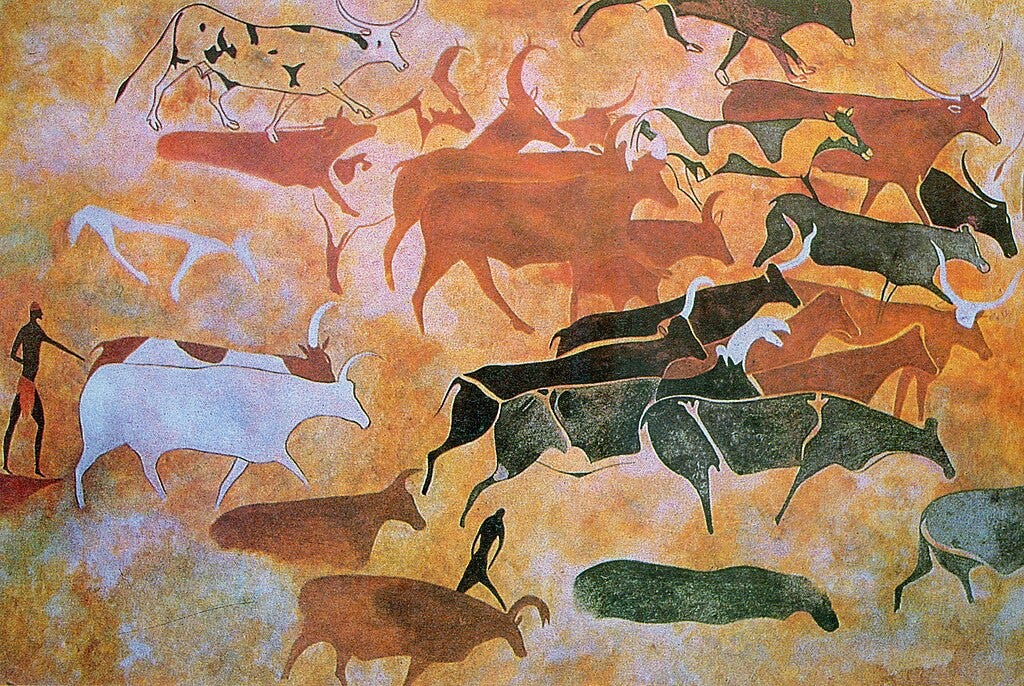
Acknowledged possession clearly works much more cleanly with domesticated animals: species that have been habituated to human control across generations. While identification of ownership by some mechanism (e.g., branding or tagging) is likely to be needed to enable a robust clarity in case of disputes, the presumption of control usually means that the conventions of acknowledged possession will readily apply.
Where things get awkward is that some wild animals might be somewhat tame, and some domesticated animals might go wild, while control can have nuances. For instance, bees are clearly not domesticated, are not controlled as individuals, and may swarm quite independently. On the other hand, a certain amount of control can be exercised over a hive, and its products.
As humans have always highly prized honey—it is one of the few forms of gathering that is reliably male—folk have been making laws about bees ever since we began to have laws. This was especially so once land became owned.
So, while living beings may generate some complexities due to having the capacity for action on their own behalf, nevertheless, living-things-as-property fit within, and are created by, the conventions of acknowledged possession. They do, however, show how notions of control interact with conventions of property—having enough control that it can be yours! and so accepted as generating a right-to-decide.
Regulation as control over attributes
Law can state what will be recognised as property and what you can do with what is recognised as property. As we have seen, none of this is necessary for there to be property but, done in ways that reduce transaction friction, law can make property much more secure and more productive. Law can do so even beyond the basic value of pacification by the state, that reduces the salience of the trade-or-take choice.
Law can also regulate property through the exercise of various official discretions. At the most basic level, official discretion can never be entirely eliminated, as officials of the state often have considerable functional choice over whether and how they enforce the law. Indeed, much of the effort into creating a well-organised state is to set up structures that make law enforcement their default choice.
One of the major problems with black markets is generating sufficient wealth to motivate (and fund) paying officials not to enforce the law. As noted previously, corruption is essentially the market for official discretion and will tend to be worse the more pervasive official discretions are and the more profit is to be had from purchasing such discretion.
If official permission is required to engage in some transactions—so that regulation goes well beyond setting general rules—then the relevant official is being given control over that attribute of some owned thing. As noted previously, that is a form of property right, a right-to-decide. Hence the elevated potential for corruption: to purchase how they exercise that control.
The presumption behind such regulation is that official will exercise their discretion according to the declared purpose of the regulation, thereby achieving said purpose. This is often, however, a very dubious presumption. There is both an information problem—how well can the official judge the consequences of what they do?—and the difficulty of what incentives are actually operating on the official. It is, for instance, quite likely that the incentive structure will favour one sort of decision rather than another, due to the way bureaucratic and political structures work. Beyond failing to incorporate relevant information, regulation can also distort or suppress relevant information.
The information and incentive burden is such that it is rare for such discretionary regulation to act in the interests of the wider society. It is much more likely to act in the interests of the better organised, the better connected and to generate a general status quo bias in favour of incumbent firms, owners, etc. Hence the recurrent tendency for elimination of such official discretions to be beneficial. Such benefits can come from reducing corruption (the experience of Britain from c.1750 to c.1850) or in promoting an increase, even a dramatic increase, in commercial activity (also the experience of Britain in said period; of postwar Germany; of post-1983 Antipodes, etc.).
So, general rules can be very beneficial due to reducing transaction friction and harms to third parties (i.e. negative externalities). Requiring official permissions can be not so, due to increasing transaction friction, having inherent knowledge problems, and creating misaligned incentives, including for corruption. Unsurprisingly, there is a strong positive association between economic freedom and economic development.
What is needed and what is useful
So, to summarise this multi-post exploration of property as acknowledged possession generating rights-to-decide, conventions develop to handle our interactions because we are so much a social, imitative and normative species, regularly engaging in mutual signalling, and seeking to benefit from interactions by aligning our expectations. Conventions work because they create win-win interactions.
It is very useful for interacting parties to have expectation-aligning conventions about who decides about what. Agreed signals of possession, by what has reliably common information salience, provide the basis for the mutual acknowledgment of rights-to-decide that establishes and sustains the conventions of property. Hence, we can go into markets or bazaars all over the world and understand what is going on.
Even command economies have to delegate rights-to-decide. They also regularly end up generating (black and grey) markets. More generally, if the state generates too much transaction friction, the conventions of property based on mutual acknowledgement allows exchange to shift to informal markets.
You don’t need the state to have property or exchange networks (or money). You don’t even need law to have property and commerce (and money). But a responsively pacifying state with good rule of law is an excellent thing to have. A large part of why that is so, is that the conventions of acknowledged possession can work that much more smoothly. (This particularly includes killing each other much less.)
The conventions of acknowledged possession may not require the state, but they operate much more felicitously within its realms of pacification and even more felicitously where the laws of the state work with, rather than against, the signalling simplicity of such win-win conventions.
The fifth and last post in the series examines how post-1978 China managed to have a commercial take-off well before it legalised commercial property in 2004. But, before that, there will be an interlude post on understanding the Great Enrichment—the shift from mass poverty to mass prosperity—that began in the 1820s.
References
Books
Katy Barnett & Jeremy Gans, Guilty Pigs: The Weird and Wonderful History of Animal Law, La Trobe University Press, 2022.
Yoram Barzel, Economic Analysis of Property Rights, Cambridge University Press, [1989], 1997.
Cristina Bicchieri, The Grammar of Society: The Nature and Dynamics of Social Norms, Cambridge University Press, 2012.
Cristina Bicchieri, Norms in the Wild: How to Diagnose, Measure and Change Social Norms, Oxford University Press, 2017.
Catherine M. Cameron, Captives: How Stolen People Changed the World, University of Nebraska Press, 2016.
Stephanie Coontz, Marriage, a History: How Love Conquered Marriage, Penguin, [2005] (2006).
Michael J. R. Crawford, An Expressive Theory of Possession, Hart Publishing, 2020.
Paul R. Gregory and Valery Lazarev (eds), The Economics of Forced Labor: The Soviet Gulag, Hoover Institution Press, 2003.
Frank H. Knight, Risk, Uncertainty and Profit, Cosimo, [1921] 2005.
Marcel Mauss, The Gift: The form and reason for exchange in archaic societies, trans. W.D.Halls, W W Norton, [1925] 1990.
Robert Neuworth, The Stealth of Nations: The Global Rise of the Informal Economy, Pantheon Books, 2011.
Orlando Patterson, Slavery and Social Death: A Comparative Study, Harvard University Press, [1982] 2018 [SaSD].
John P. Powelson, Centuries of Economic Endeavor: Parallel Paths in Japan and Europe and Their Contrast with the Third World, University of Michigan Press, 1994.
Thomas Sowell, Knowledge and Decisions, Basic Books, [1980] 1996.
Will Storr, The Status Game: On Social Position And How We Use It, HarperCollins, 2022.
Edward Peter Stringham, Private Governance: Creating Order in Economic and Social Life, Oxford University Press, 2015.
Articles, essays, etc.
Plamen Akaliyski, Vivian L. Vignoles, Christian Welzel, and Michael Minkov, ‘Individualism–collectivism: Reconstructing Hofstede’s dimension of cultural differences,’ Journal of Personality and Social Psychology, (2025) Advance online publication. https://psycnet.apa.org/fulltext/2027-01517-001.html
Sean P. Alvarez, Vincent Geloso, Macy Scheck, ‘Economic Freedom Matters A Lot More for Economic Development Than You Think!,’ GMU Working Paper No. 23-14, February 23, 2023. https://papers.ssrn.com/sol3/papers.cfm?abstract_id=4368623
Arthur L. Corbin, ‘Legal Analysis and Terminology,’ The Yale Law Journal , Vol. 29, No. 2, Dec., 1919, 163-173. https://openyls.law.yale.edu/server/api/core/bitstreams/9effd79b-398b-4935-aff7-45394cde96e8/content
Harold Demsetz, ‘Towards a Theory of Property Rights’, American Economic Review, Volume 57, Issue 2, May 1967, 347-359. https://pdfs.semanticscholar.org/38c0/4ebc14c2f5fc70a61f4521f6568522413a92.pdf
Alan Page Fiske, ‘The Four Elementary Forms of Sociality: Framework for a Unified Theory of Social Relations,’ Psychological Review, 1992, Vol. 99, No. 4, 689-723. https://www.researchgate.net/publication/21700623_The_four_elementary_forms_of_sociality_Framework_for_a_unified_theory_of_social_relations
Meir Kohn, ‘An Alternative Theoretical Framework for Economics,’ Cato Journal, Vol. 41, No. 3 (Fall 2021). https://www.cato.org/cato-journal/fall-2021/alternative-theoretical-framework-economics
Pierre-Guillaume Méon, Laurent Weill, ‘Is corruption an efficient grease?,’ BOFIT Discussion Papers, (2008) No. 20/2008, Bank of Finland, Institute for Economies in Transition (BOFIT), Helsinki. https://www.econstor.eu/bitstream/10419/212633/1/bofit-dp2008-020.pdf
Nathan Nunn, ‘Culture And The Historical Process,’ NBER Working Paper 17869, February 2012. http://www.nber.org/papers/w17869
Michael T. Rock, Heidi Bonnett, ‘The Comparative Politics of Corruption: Accounting for the East Asian Paradox in Empirical Studies of Corruption, Growth and Investment,’ World Development, Volume 32, Issue 6, 2004, 999-1017. https://afca.edu.au/wp-content/uploads/2024/12/Rock-Bonnett-2004-The-comparative-politics-of-corruption-Accounting-for-the-East-Asian-paradox-in-empirical-studies-of-corruption-1.pdf
Daniel Seligson and Anne E. C. McCants, ‘Coevolving institutions and the paradox of informal constraints,’ Journal of Institutional Economics, 2021, 1–20. https://www.cambridge.org/core/services/aop-cambridge-core/content/view/CE95D185B7EA557C5D0066FA7D785BCB/S1744137420000600a.pdf/div-class-title-coevolving-institutions-and-the-paradox-of-informal-constraints-div.pdf
Jordan E. Theriault, Liane Young, Lisa Feldman Barrett, ‘The sense of should: A biologically-based framework for modeling social pressure’, Physics of Life Reviews, Volume 36, March 2021, 100-136. https://pubmed.ncbi.nlm.nih.gov/32008953/
Tian Chen Zeng, Alan J. Aw, & Marcus W. Feldman, “Cultural hitchhiking and competition between patrilineal kin groups explain the post-Neolithic Y-chromosome bottleneck”, Nature Communications, 2018, 9:2077. https://www.nature.com/articles/s41467-018-04375-6