

If I wanted to summarise our current global predicament in a single sentence it would be: our technology is outrunning our evolutionary adaptations. The most obvious manifestation of this is the collapse of fertility rates, but surging mental health and metabolic health issues also flow from this. Then there is the way that social media and the internet has enabled the personality disordered to hijack propriety and derail achievement-based prestige.
Interacting with these pressures, are creeping institutional dysfunctions. Much of this is from toxic sociotropy—emotional safety through conformity—by people whose ideas are not subject to reality-tests. When people complain about progressive white women (aka Affluent White Female Urban Liberals), they are complaining about those who are most susceptible to moralised sociotropy while also being insulated from the consequences of their ideas. In my previous post, I discussed the evolutionary reasons for this moralised conformity, and its dysfunctional tendencies.
We are also experiencing political turmoil. Across the Western—particularly Anglosphere—politics, we are seeing the collapse of conventional centre-right politics. The latest manifestation of this is the Australian national populist Party—One Nation—has just won a thumping by-election victory in Western Australia.

This win was remarkable for several reasons. First, One Nation won a “safe” Labor seat in a State with a popular Labor Government—in 2025 it won a second landslide, and third successive, election victory. Previously, One Nation had seemed mainly a threat to the centre-right Coalition Parties. Secondly, despite this being the latest in the continuing One Nation surge since the 2025 Australian Federal election, there is still a remarkable amount of dismissive cope in commentary.
Thirdly, despite Australia being widely seen as having handled mass immigration notably better than other Anglosphere countries—both in having effective border control and in being selective in who it lets in—Australia is also reaching the limits of electoral tolerance of mass immigration. This should be a lot less surprising than it is, but—due to the systematic analytical incompetence of mainstream Economics on immigration, with its ludicrously simple “but more transactions, so GDP goes up” analysis—it is clearly much more of a shock to policy makers, politicians and many commentators than it would be if they were not quite so historically illiterate.
This is part of so-called “social sciences” not being sciences due to not accepting consilience with more fundamental causal structures—that everything social is emergent from the biological—by not being grounded in what we know from evolutionary biology and anthropology.
Fourthly, despite broadly “cultural” politics becoming more salient, economic management still matters. Veteran Australian political journalist Michelle Grattan produced one of the better analyses of the result. She noted that:
The fundamental issue now is that for many people their material circumstances (represented by real wages) have been going backwards, their aspirations (buying a house) have been thwarted, and much of life in general has become more difficult.
On the last point, including by mass immigration creating ever more congestion.
General patterns
Looking more specifically at the current dynamics—particularly political dynamics—across the Western democracies, if we put together the insights of various analysts of contemporary societies, we can understand where we are and how we got here.
Start with political economist Thomas Piketty. In looking at the patterns of postwar politics across Western democracies, he identified a retreat of working-class-oriented politics and the advance of the politics of the possessors of human capital. He called the resulting contest between the holders of human and of commercial capital the contention between the Brahmin Left and the Merchant Right.
Social analyst David Goodhart adds another dimension to this, with his distinction between the Anywheres—those whose networks, whose social connections, are not based on a locality, they extend across localities, including across international borders—and the Somewheres: those whose networks are very much based on the locality they live in. Anywheres tend to overwhelmingly dominate our institutions, including mainstream media.
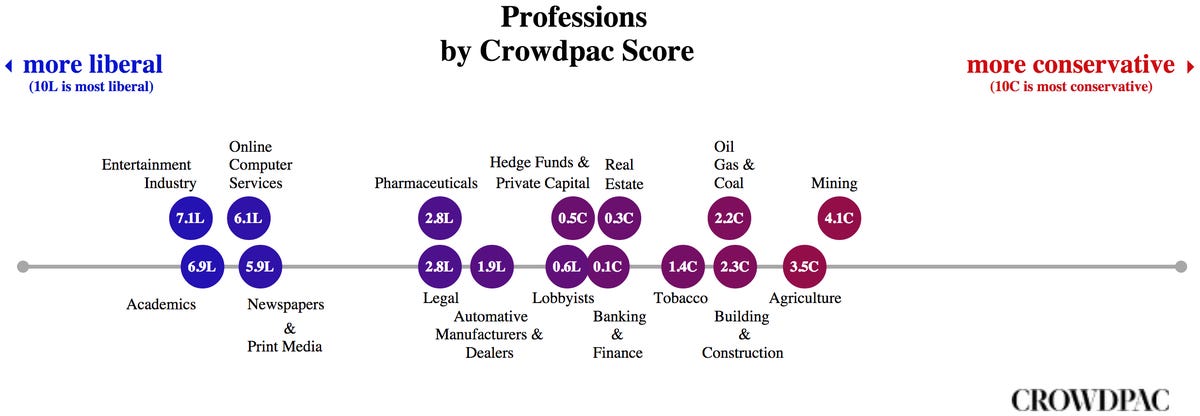
As communication and transport costs have fallen, the networks of Anywheres have become more and more international; to the extent that they increasingly identify much more with folk like themselves across national borders than they do their own working classes. This generates globalist politics.
Both the Brahmin Left and the Merchant Right tend to be Anywheres, further dividing what conventional politics has become from the working class and its concerns. This Anywhere domination of conventional politics is much of what drives what has become known as the UniParty dynamic.
Looking at the Secret Harbour by-election, the winning One Nation candidate was a local gym owner—so, a classic rooted-in-locality Somewhere. The ALP candidate was a former staffer who had worked for a large mining company: a classic Anywhere.
UniParty dynamics apply to policy areas where Somewhere perspectives differ noticeably from Anywhere perspectives and do not get much purchase within conventional politics due to Anywhere dominance of institutions. The most extreme example of this is the way British voters have regularly voted for less immigration and continually get much more. But there is a general tendency for the cultural politics of elected politicians in Western countries to systematically differ from the preferences of voters in a way that is, for example, not true of economic policy.
Countries whose elites do not network in such ways—Japan most obviously—generate much more internal, particularly cultural, solidarity.
Sociologist Musa al-Gharbi examines the elite status games that have arisen to further differentiate Anywhere elites from the Somewheres. Social psychologist Rob Henderson’s concept of Luxury Beliefs is congruent with this analysis. The massive increase in the use of moral abuse terms in media and academic articles tracks the Great Awokening.
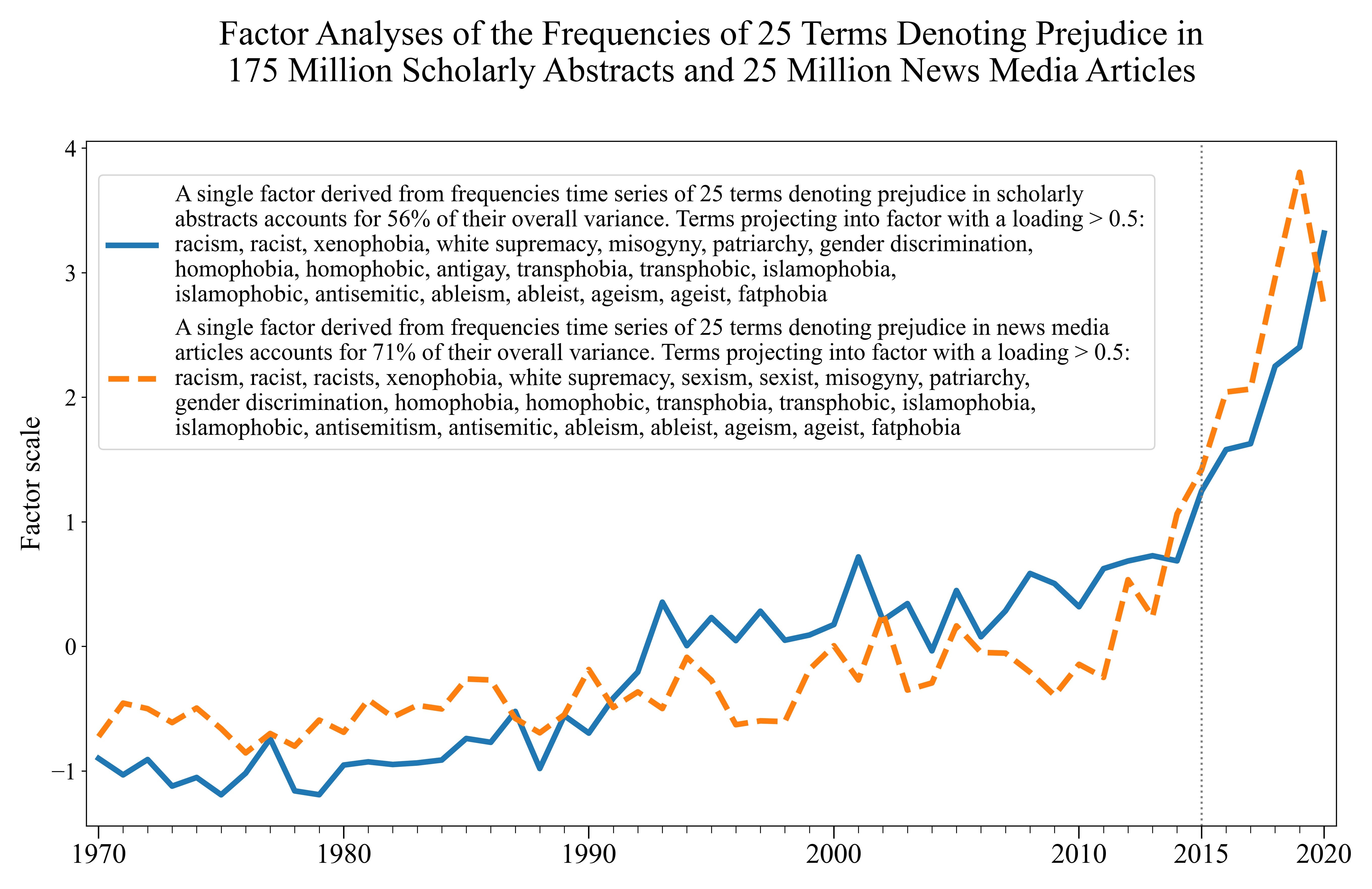
This differentiation by status games, linguistic taboos and moral abuse has particular intensity for the Brahmin Left as complexity scientist Peter Turchin’s concept of elite over-production (and counter-elite formation) comes into play. Musa al-Gharbi’s analysis is in a similar vein to sociologist Christopher Lasch’s The Revolt of the Elites thesis.
Musa al-Gharbi argues that the contemporary Great Awokening is only the most recent version of periodic surges of elite over-production generating intensified moral claims to both supplant current placeholders and to expand moral projects for aspiring elites, increasing their employment prospects and claims on resources. Moral abuse is central to such Brahmin Left Anywhere politics as it gives them social leverage and delegitimises dissent or pushback.

To all this, we can add journalist Richard Miniter’s concept of the unaccountable classes—those paid to turn up rather than for their performance—who therefore do not have to make things work. They can thus concentrate on status politics—including seeking to control legitimacy and de-legitimise dissent—to give themselves moral authority and claims over resources.
That the unaccountable classes do not have to make things work is bad enough. What is worse is that a considerable section of the unaccountable classes rely on social pathologies for their income; even to the extent of getting more access to resources if social pathologies get worse, or if more things are labelled as social pathologies and moral failures.
So, public health gets more resources the worse our collective metabolic health becomes. Indigenous policy gets more resources the worse indigenous folk do. Disabled policy gets more resources more people count as disabled. Human rights commissions get more authority the more things are defined as racist. The homeless-industrial complex gets more funds if homelessness gets worse, and so on. In such circumstances, not only do the unaccountable classes do not have to make things work, many of them get rewarded for social dysfunction.
This all culminates in what political historian Steven Davies analyses as the politics of realignment. He gives the most comprehensive view of the political re-alignment, delving into the history, economics, technology and geopolitics.
In the later C19th and early C20th, politics moved away from liberals (centred on mercantile interests) versus conservatives (centred on landed interests) as the working class pushed its concerns into electoral politics, much to the horror of the great and good, who thought the issues the working class was raising should not be part of politics and public policy. The liberals found themselves displaced and either forced into alliance with conservatives or reduced to third Party status. That generated the Labour v Capital politics that was such a prominent feature of Western democratic politics up until the shifts documented by Thomas Piketty and his colleagues.
We are now in another period of realignment, where once again the working class is pushing its concerns into politics, much to the horror of the great and the good.
The dynamics of post-Cold War politics
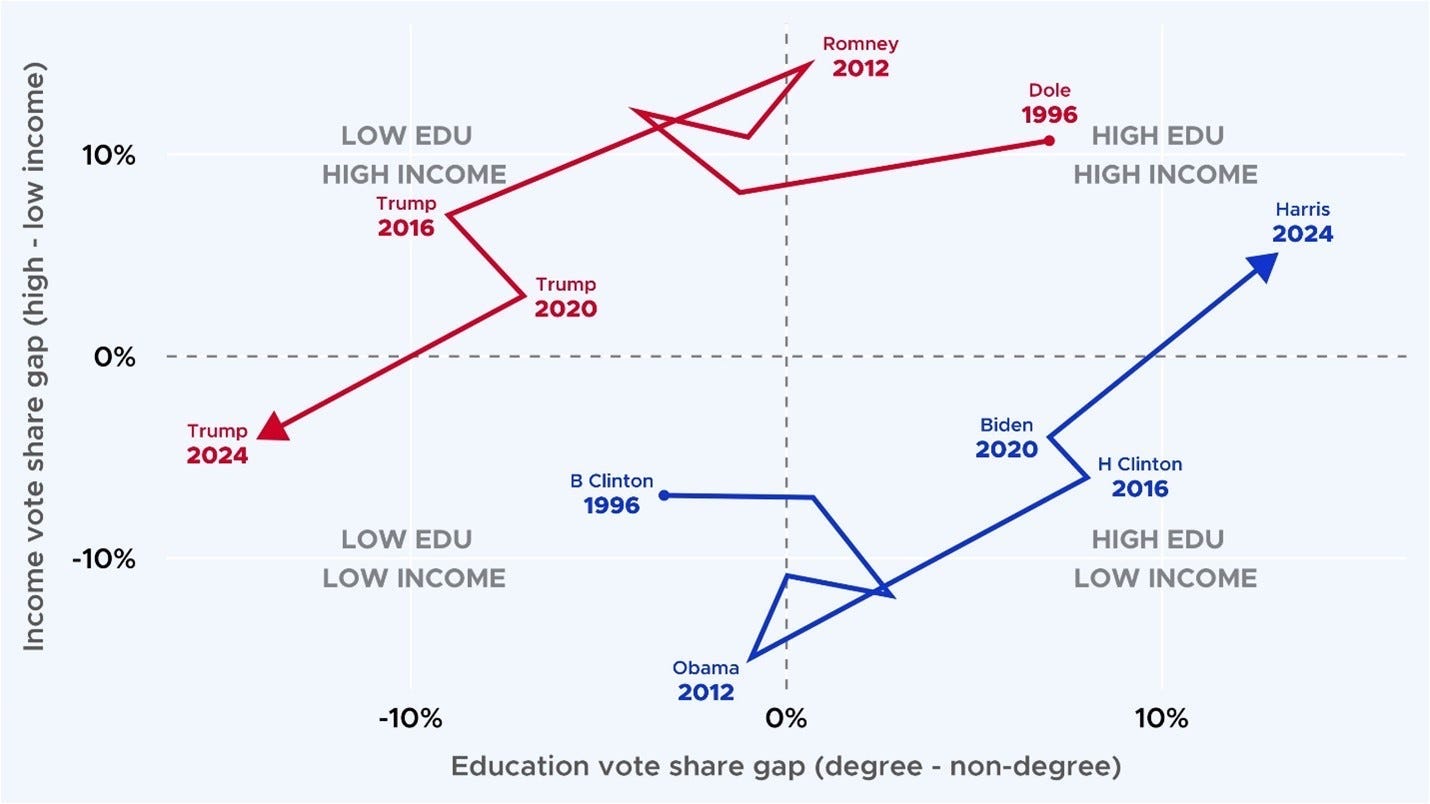
The end of the Soviet Union in 1991 meant that Western elites stopped worrying that their working classes might defect to a rival ideology or concerning themselves that they might have to mobilise their working classes for some future existential struggle. This—combined with the expanding strength of transnational networking, so of globalist politics—has led to a multi-level assault on the interests of Western working classes, coupled with striking levels of implicit or explicit contempt for the same, which mass immigration has been both a manifestation of and an excuse for.
That assault includes trade policies that off-shored manufacturing; technology that hollowed out local manufacturing employment; mass immigration that broke up working-class communities, and so their locality-based social networks, while generating a fractured demos; denigration of the local majority’s cultural heritage, often using immigration as an excuse to do so; morally grandstanding debauching of beloved entertainment franchises; housing policies that drove up rents and house prices by restricting housing supply by zoning and other regulatory restrictions while driving up demand through mass immigration; education, policing and prosecution policies that put the local working class as the lowest priority; using metastasising linguistic taboos to—via moral abuse, cancel culture and outright censorship—block and de-legitimise working class speech as unacceptably morally vulgar; plus a general shift to non-electoral—often transnational—institutional policy-making that by-passes working class votes.
When working class voters—in reaction to all this—start voting national populist, this becomes the excuse for another wave of moral abuse and de-legitimisation. For one thing that our increasingly feckless Anywhere elites in Western countries can agree on—none of this is their fault. [Added graph.]
Where now?
The question now becomes, how successful can this national populist pushback be? We have reasons to be pessimistic.
The first concern is whether the national populists can put together the intellectual firepower to generate and implement effective policies, particularly given the level of institutional resistance, and outright sabotage from within institutions, one can expect. This is especially so given the effort put in to morally and cognitively delegitimise voting national populist.
The second is the magnitude of the problem. To successfully balance the risk management concerns of working class voters with fiscal recovery and economic growth is a big ask. There is also in the sheer scale of institutional reform required.
The third concern is the nature and source of the status games that have been selected for within Brahmin Left Anywhere progressivism. These are very much morally absolutist status games, regarding all dissent from their politics as morally illegitimate. Generated by Critical Social Justice—which itself is derivative of meditations on Marxism—those status games, and their associated politics, have resulted in the development of networked versions of the mechanisms of social control one sees in outright Marxist polities.
Thus DEI (Diversity, Equity, Inclusion) generates what are, in effect, commissars, even if they are called DEI officers, intimacy consultants, diversity readers, bias response teams, or whatever. They operate on the principle of the medieval inquisitor: error has no rights and they can determine error. DEI training can be not much more than struggle sessions.
DEI creates a moral caste system—female is better than male; coloured is better than “white”; queer is better than straight; disabled is better than able-bodied; immigrant is better than native; trans is better than cis—based on Theory, not serious evidence. Which appointments are, and are not, celebrated by the identity characteristics of those hired displays the DEI moral caste system in operation.
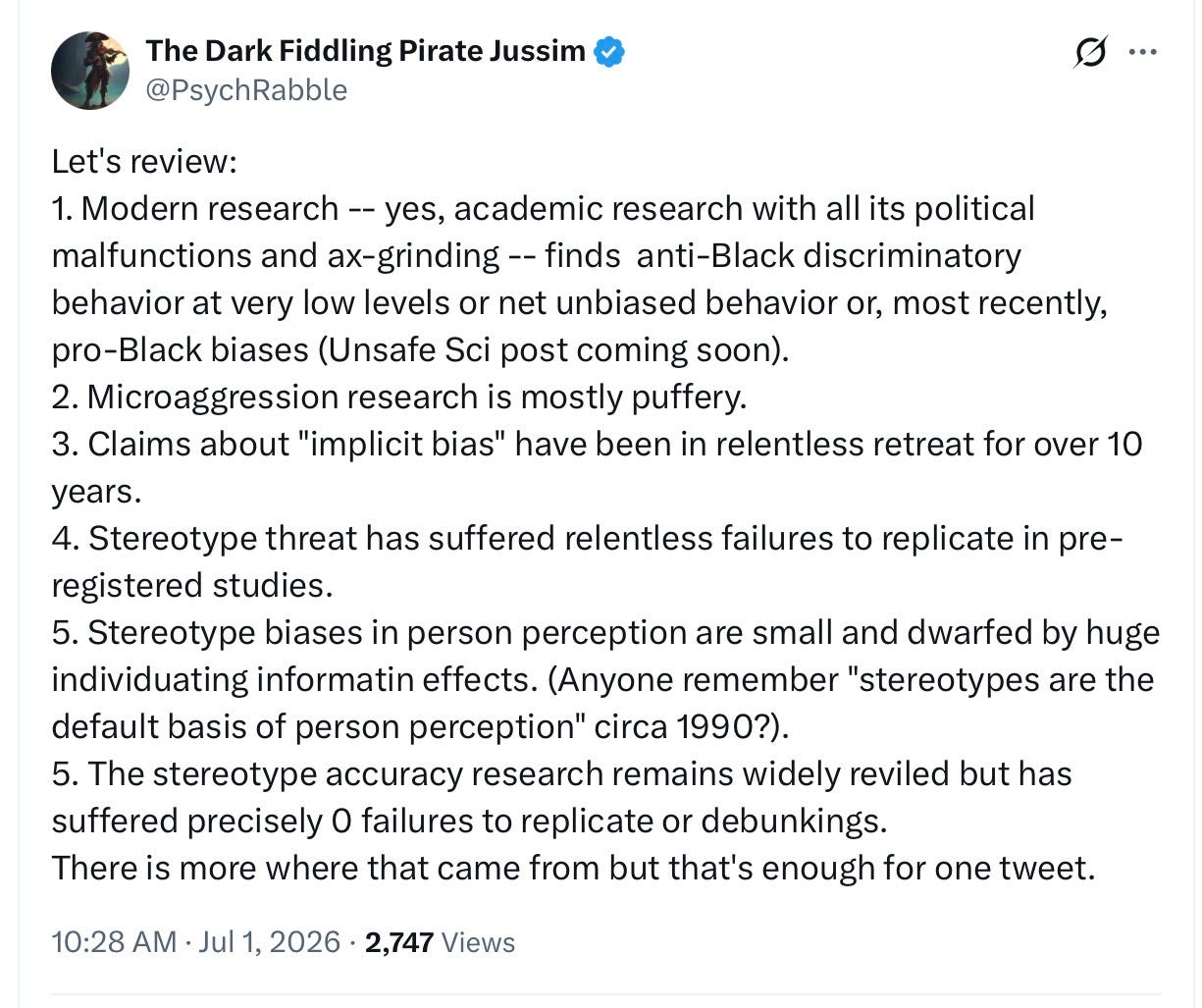
The intense ideological conformity within literary and cultural circles are forms of networked Zhdanovism. Given the way genderwoo in particular, and Critical Social Justice in general, has invaded science and medical publishing, licensing bodies, universities, school systems, and so on, we have networked Lysenkoism.
All this is justified by an intolerant moral absolutism that defines dissenting politics as a profoundly illegitimate threat to Our Democracy and who not only do not identify with their own working class or cultural heritage, they open and avidly despise both. Such politics seeks to turn elections into legitimating rituals that are not allowed to change anything that Anywheres care about.
Anywheres—especially left-progressivist Anywheres—increasingly do not share a common, overarching, normative framework with their working class, or the national populists. This is very different from the situation in the late C19th and early C20th. The notion that the West no longer has a “true left” is nonsense: what we are seeing is left-progressivist politics that no longer has to pretend to care about, or socially engage with, working class (Somewhere) concerns.
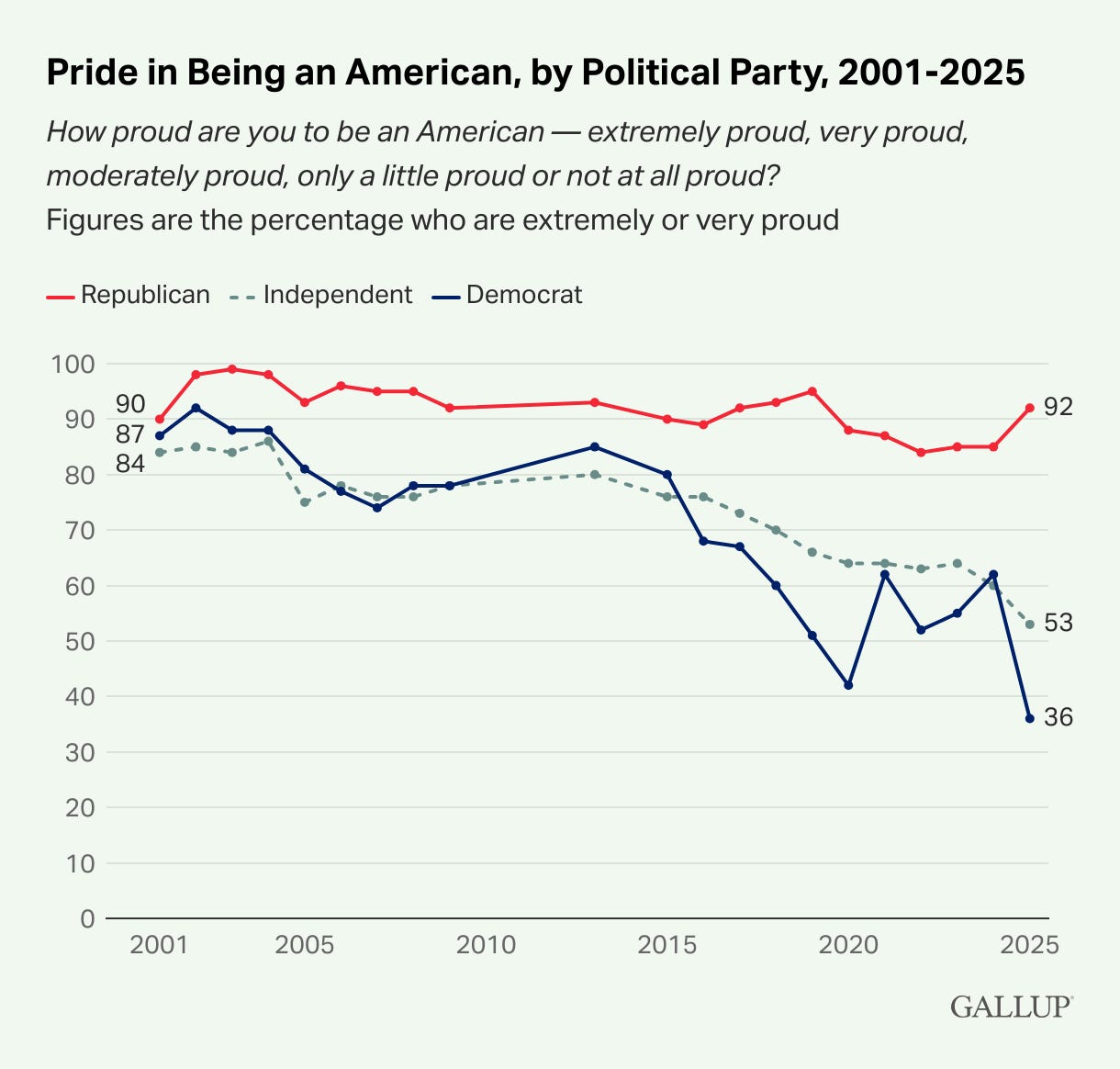
There are two great dangers. (1) The national populists will fail, and the processes of social corrosion, institutional decay and alienation will continue, with the conditions for violent internal instability continuing to build. (2) The national populists will begin to succeed, in which case there are enough motivated moral zealots that we could see serious institutional, even violent, revolts.
We have gone through such an analogous political realignment in the late C19th and early C20th remarkably peacefully—in the Anglsophere: elsewhere, not so much. That past success provides no guarantee that it will be repeated.
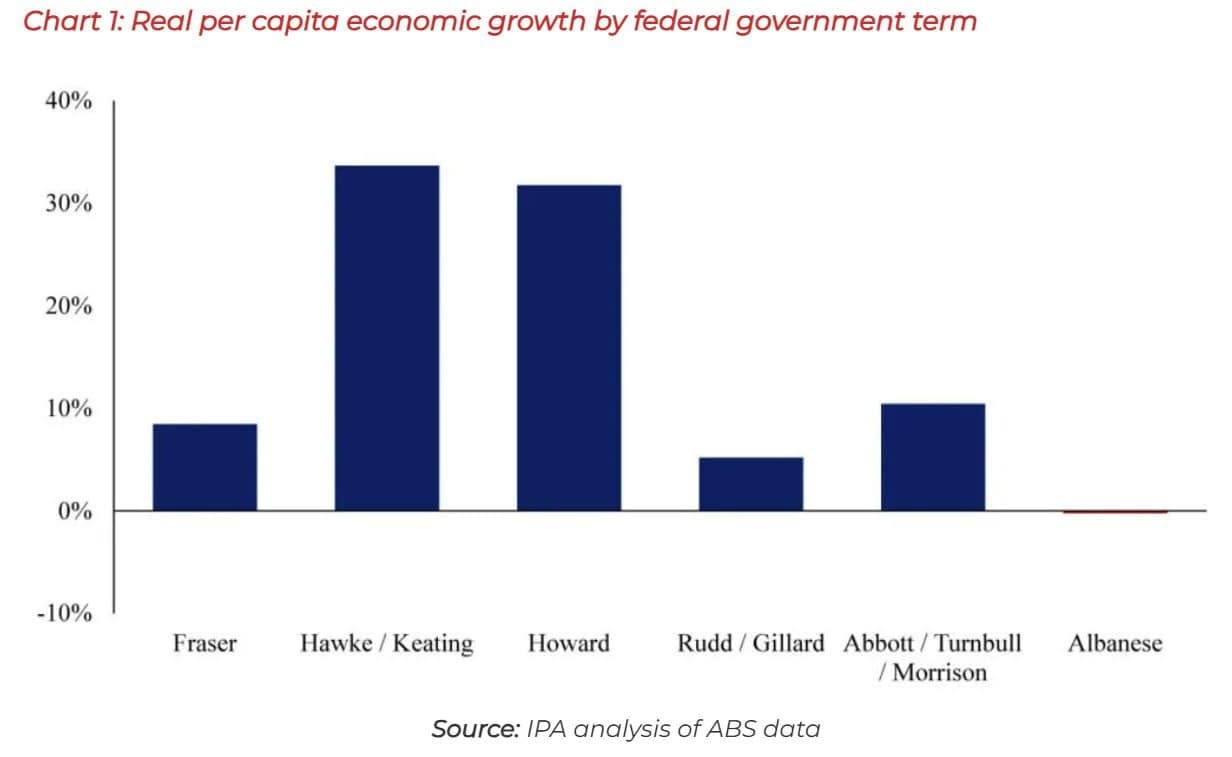
ADDENDUM: A shift in the debate: the Australian Financial Review publishes an opinion piece arguing for net emigration. Meanwhile, per capita GDP growth figures show, the triumph of the Hawke-Keating-Howard neoliberal policy era, the neoliberal policy regime “running out of puff” as I discuss here and here, and why even Australia is reaching the end of electoral tolerance of mass immigration.
The obviously contradictory combination of Net Zero with mass immigration is producing political turmoil wherever it has been imposed. Our fecklessly incompetent Anywhere elites in operation.
ADDENDUM SECUNDUS: Helen Andrews’ essay on how mass immigration has made the US civil rights social compact unworkable is another case of fecklessly incompetent Anywhere elites in operation, plus how utterly inadequate mainstream Economics analysis of immigration has been. That compact was based on the nonsense claim that social outcomes can be expected to be evenly distributed across all social groups. This is utter nonsense, given that neither genetic nor cultural traits are equally distributed among human populations.
The cultural implications of mass immigration is not working out the way it was supposed to for left-progressives, despite being very useful for various forms of social and cultural corrosion (which core sections of left-progressivism have been openly in favour of for about a century).
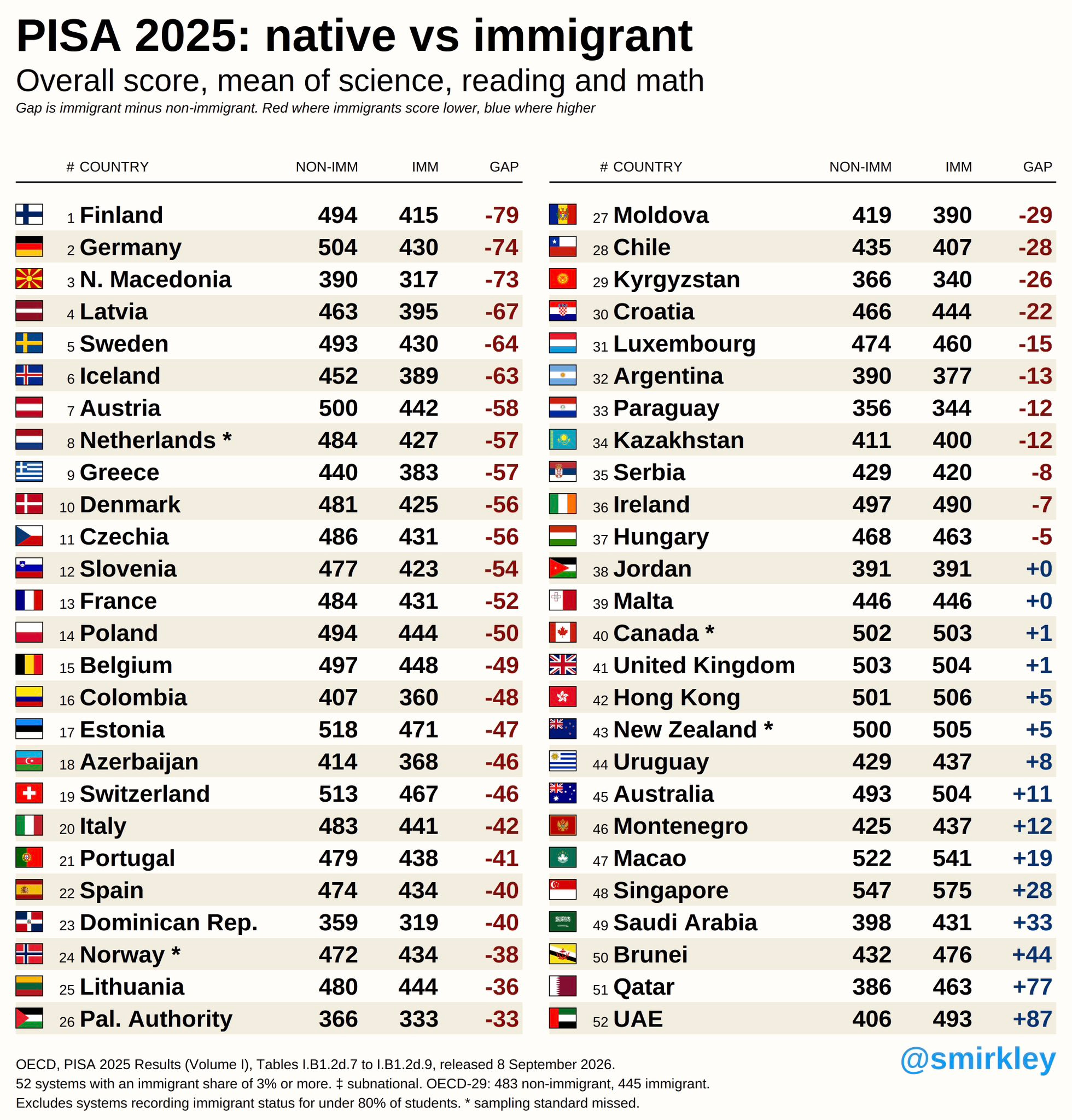
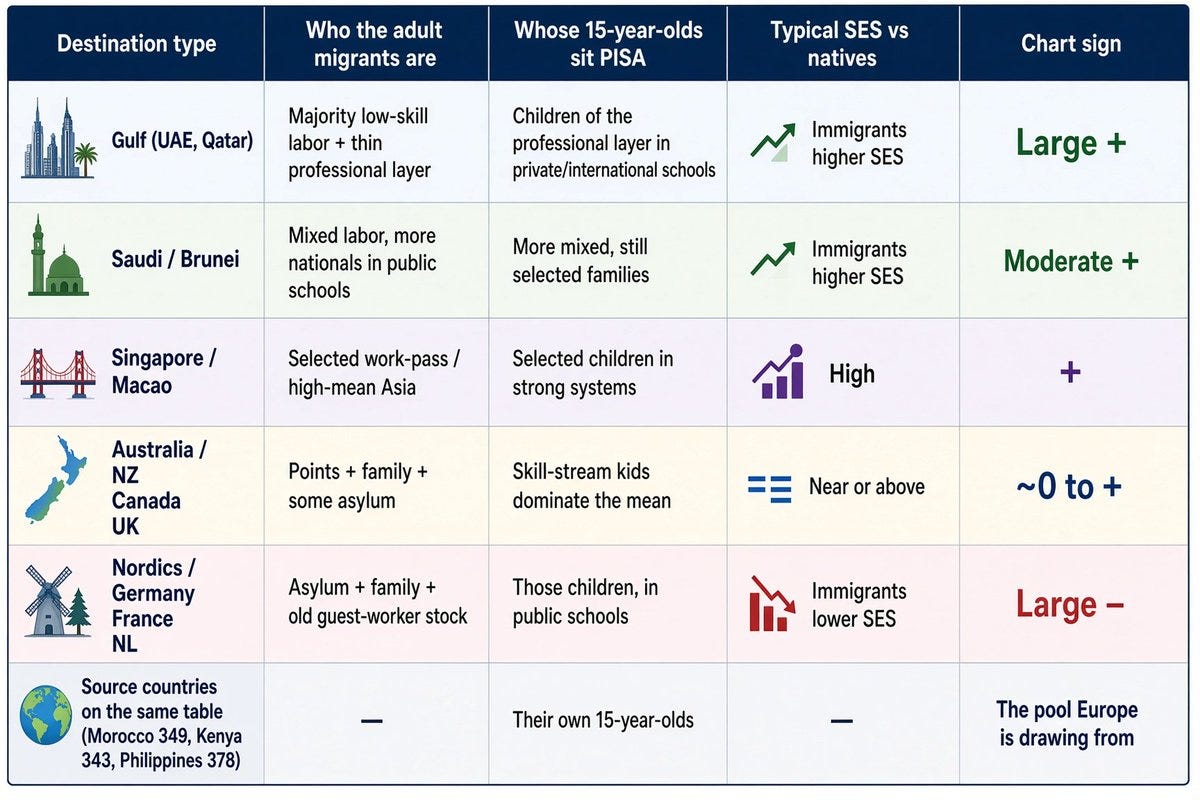
It is striking how some countries are making themselves stupider, and others smarter, through immigration.
References
Stephen Davies, The Great Realignment: Why the New Right is Here to Stay, Polity Press, 2026.
Roger Eatwell and Matthew Goodwin, National Populism: The Revolt Against Liberal Democracy, Pelican, 2018.
Amory Gethin, Clara Mart´inez-Toledana, Thomas Piketty, ‘Brahmin Left Versus Merchant Right: Changing Political Cleavages In 21 Western Democracies, 1948–2020,’ The Quarterly Journal Of Economics, Vol. 137, 2022, Issue 1, 1-48. https://academic.oup.com/qje/article/137/1/1/6383014
Musa al-Gharbi, We Have Never Been Woke: The Cultural Contradictions of a New Elite, Princeton University Press, 2024.
Herbert Gintis, Carel van Schaik, and Christopher Boehm, ‘Zoon Politikon: The Evolutionary Origins of Human Political Systems’, Current Anthropology, Volume 56, Number 3, June 2015, 327-353. https://pubmed.ncbi.nlm.nih.gov/29581024/
David Goodhart, The Road to Somewhere: The New Tribes Shaping British Politics, Penguin, 2017.
Mark Granovetter, ‘The Strength of Weak Ties: A Network Theory Revisited,’ Sociological Theory, Vol.1, 1983, 201-233. https://www.csc2.ncsu.edu/faculty/mpsingh/local/Social/f15/wrap/readings/Granovetter-revisited.pdf
Harold Robertson, ‘Complex Systems Won’t Survive the Competence Crisis,’ Palladium: Governance Futurism, June 1, 2023. https://www.palladiummag.com/2023/06/01/complex-systems-wont-survive-the-competence-crisis/
Will Storr, The Status Game: On Social Position And How We Use It, HarperCollins, 2022.
Lorenzo, this latest post is an unexpected treat. You have taken the many threads you’ve been pulling on for years - fertility collapse, institutional rot, elite status games, the realignment of Western politics - and woven them into one clear picture. Instead of another standalone diagnosis you bring together Piketty on the Brahmin Left versus the Merchant Right, Goodhart on Anywheres versus Somewheres, al-Gharbi and Turchin on elite over-production and moralized status competition, Henderson on luxury beliefs, Miniter on the unaccountable classes, and Davies on the current political realignment, and you show how they actually fit together. The result is a coherent view of a civilization whose technology has outrun its evolutionary adaptations, whose institutions are increasingly run by people insulated from consequences, and whose conventional parties no longer speak for the rooted majorities they once claimed to represent. The essay therefore works both as a useful map of the present and as a reminder of why your longer body of writing is worth going back to: you ground it in evolutionary, biological and historical realities. The authors you listed, even though their descriptions are insightful and varied, and they all have explanations based on their specific way of looking at the world, it feels to me they are dealing with abstract humans, as they mostly miss the root of explanatory power - the evolutionary process that brought us here and made us who we are as humans, in our best and our DSA worst.
Terrific analysis of the Hollow Men. Thanks.